
Luke SIGMUND Consultant
×
Effective DISC Assessment: A Team Building Guide for HR Professionals
Your team has the right skills on paper. Yet deadlines slip. Tensions build. Communication breaks down. The problem is rarely competence — it is behavioral mismatch.

The DISC assessment gives HR professionals a structured, evidence-based method to understand exactly how each person on a team thinks, communicates, and reacts under pressure. Not their IQ. Not their resume. Their behavior — the one variable that determines whether a team collaborates or implodes.
This guide is for HR professionals who are done guessing. You will find a clear breakdown of each DISC profile, concrete team-building applications, and actionable steps you can run from your next session.
What Is the DISC Assessment and Why Should HR Teams Care?
A behavioral model, not a personality label
The DISC model organizes observable workplace behavior into four primary styles: Dominance (D), Influence (I), Steadiness (S), and Conscientiousness (C). These categories describe how a person tends to act — not who they fundamentally are.
That distinction matters. DISC does not measure intelligence, values, or potential. It measures behavioral tendencies in a work context. That makes it directly usable for HR decisions: team composition, role assignment, communication coaching, and conflict resolution.
"Understanding behavioral styles is not about putting people in boxes — it is about giving teams a shared language to work through differences." — Brighter Strategies, January 2025
Where DISC came from
The framework originates from psychologist William Moulton Marston's 1928 work Emotions of Normal People. Marston identified four primary emotional responses that shape behavior in social environments. Decades of organizational psychology have since validated and refined the model for workplace use.
Today, DISC is one of the most widely used behavioral assessments globally. More than 1 million people complete a DISC-based assessment every year, according to data from Wiley, the publisher behind Everything DiSC.
Why HR professionals choose DISC over other tools
Compared to other psychometric models, DISC has three practical advantages for HR use:
- Speed — Most DISC assessments take 10 to 15 minutes to complete.
- Accessibility — Results use plain language. No psychology degree required to interpret them.
- Actionability — Outputs map directly to team roles, communication adjustments, and development plans.
According to HR Avatar (2025), organizations using DISC-based assessments reduce their onboarding learning curve by up to 30% by giving managers concrete behavioral context from day one.
The Four DISC Profiles: What HR Professionals See in Real Teams
D — Dominance: the driver who pushes for results
The D profile is direct, decisive, and driven by results. In a team setting, this person moves fast. They make calls when others hesitate. They thrive in high-stakes environments with clear outcomes.
The challenge? D profiles can steamroll collaboration. Under pressure, they default to control. Their communication style reads as blunt — sometimes to the point of damaging working relationships.
Key point: Place D profiles in roles requiring rapid decision-making and ownership. Assign them to lead project sprints, negotiations, or turnaround situations — not slow-burn consensus processes.
I — Influence: the connector who energizes the room
The I profile is enthusiastic, persuasive, and people-oriented. They are natural communicators. They build relationships quickly and create energy in group settings.
Their blind spot is follow-through. I profiles generate ideas faster than they execute them. Without structure, they can distract a team from delivery. Pair them with S or C profiles to create balance.
S — Steadiness: the stabilizer who keeps teams grounded
The S profile values consistency, patience, and loyalty. In a team context, they are the ones who absorb pressure without erupting. They listen. They support. They remember what was agreed in the last meeting.
Their limitation is adaptability. Sudden change unsettles S profiles. They need context, time, and reassurance before they can shift direction. Forcing rapid pivots without explanation generates resistance — and eventual disengagement.
C — Conscientiousness: the analyst who catches what others miss
The C profile is precise, systematic, and quality-driven. They analyze before they act. They question assumptions. They produce work that holds up under scrutiny.
The friction point: C profiles can over-analyze. In environments where speed matters, their need for completeness creates bottlenecks. They also tend to avoid conflict — which means problems go unspoken until they become structural.
Attention: No DISC profile is superior to another. Teams with only D profiles produce fast decisions and poor collaboration. Teams with only S profiles create harmony but avoid necessary conflict. Balance is the goal — not uniformity.
Why Team Building Without Behavioral Data Produces Predictable Failures
The communication gap nobody talks about
When a D profile manager gives feedback to an S profile team member, both parties usually leave the conversation with a different version of what just happened. The D thinks the issue is resolved. The S is internally spiraling.
This is not a personality conflict. It is a communication style mismatch. And it is entirely predictable — if you have the behavioral data in advance.
According to Brighter Strategies (January 2025), teams using DISC-based behavioral mapping improve interpersonal interactions by 40% — particularly in distributed team environments where communication happens across channels with no visual cues.
Conflict that starts with roles, not personalities
Ask any HR professional about recurring team conflicts. The pattern is almost always the same. A fast-moving D profile is frustrated with the pace of an S profile. A C profile challenges an I profile's undocumented idea. A detail-oriented team member clashes with a results-only manager.
These are role-behavior mismatches. The individual is not wrong. The assignment is wrong. DISC gives HR the framework to catch these mismatches before they generate turnover.
"Organizations that align roles with behavioral styles report a 25% increase in team productivity." — Profiles International, March 2025
What happens when HR skips the diagnostic step
Team-building activities without behavioral data are expensive guesswork. You run a workshop. People are polite for two days. Then they return to their desks and behave exactly as before — because nothing in their behavioral environment changed.
The diagnostic step is not optional. It is the foundation. Everything else — workshops, coaching sessions, role redesign — builds on it.
How DISC Integrates With Your Existing HR Assessment Stack
DISC and psychometric testing: complementary, not redundant
DISC is a behavioral tool. It does not measure cognitive ability, emotional intelligence, or values alignment. That means it works best alongside a broader psychometric framework — not as a standalone solution.
For HR professionals building a full picture of a candidate or team member, combining DISC data with personality and cognitive assessments creates a much sharper profile. The behavioral layer from DISC answers how someone works. Other instruments answer who they are and what they can do.
The SIGMUND HR assessment suite offers a structured approach to exactly this kind of layered evaluation — giving HR teams access to behavioral, cognitive, and personality data within a single platform.
Connecting behavioral style to leadership potential
One of the most practical DISC applications in HR is leadership identification. D and I profiles often surface naturally as leadership candidates. But raw behavioral style is not the same as leadership readiness.
An S profile with strong team coordination history may outperform a D profile who has never managed upward conflict. Behavioral data should inform leadership decisions — not determine them.
For a structured method to evaluate leadership readiness alongside behavioral style, the SIGMUND leadership potential test provides a validated, data-driven baseline that HR professionals can use before promoting or restructuring teams.
Using DISC data across the employee lifecycle
DISC is not a one-time onboarding exercise. Its value compounds when applied consistently across the full employee lifecycle:
- Recruitment — Identify behavioral alignment with team composition before the hire.
- Onboarding — Customize communication style and role expectations from day one.
- Performance reviews — Contextualize feedback delivery to the individual's profile.
- Team restructuring — Map behavioral gaps before reassigning responsibilities.
- Leadership development — Identify which behavioral traits need coaching, not just recognition.
Key point: Organizations that use DISC assessment data across more than two stages of the employee lifecycle report stronger retention outcomes than those using it only at the point of hire, according to HR Avatar (2025).
Is Your Team Ready for a DISC-Based Diagnostic?
Three questions before you start
Before running a DISC assessment with your team, answer these honestly:
- Do you have a clear outcome in mind? DISC data without an application plan generates confusion, not change.
- Is leadership aligned? If the management team has not seen their own results, the exercise loses credibility with the team.
- Do you have a debrief structure? Data without conversation is noise. Plan how results will be shared and discussed.
What a realistic implementation timeline looks like
A well-structured DISC team-building initiative for a group of 10 to 40 people typically runs across four to six weeks:
- Week 1 — HR briefing and leadership alignment session.
- Week 2 — Individual assessments completed (10 to 15 minutes per person).
- Week 3 — HR reviews team-level behavioral map and identifies gaps.
- Week 4-5 — Team workshop: profile sharing, communication exercises, role alignment.
- Week 6 — Manager debrief and individual development plan adjustments.
The one mistake HR professionals make at the start
They share results without context. A team member reads their profile, sees "Dominance," and wonders if they are being told they have a problem. Another reads "Steadiness" and interprets it as being labeled passive.
DISC results require a facilitated debrief. The language matters. The framing matters. Without it, a tool designed to build connection generates defensiveness instead.
Explore behavioral assessment tools for your teamThe second part of this guide covers the specific team-building activities HR professionals use with DISC data, how to map profiles to roles, and what to do when results reveal a structural problem your organization was not expecting.
How to Build a High-Performing Team Using DiSC Behavioral Profiles
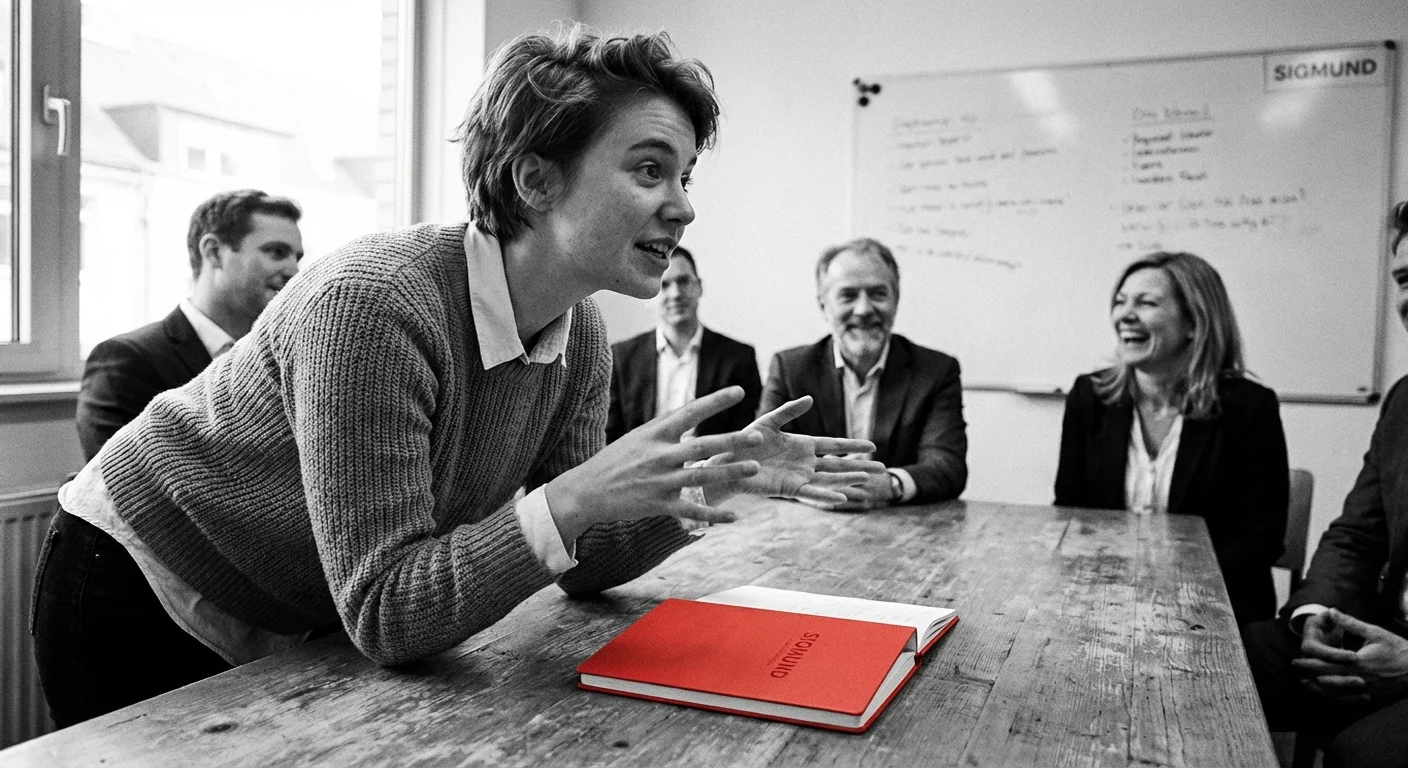
You have the DiSC data. Now what?
Most HR leaders stop at the assessment. They run the test, share the report, and move on. That is where the ROI disappears.
The real work starts after the results. According to Wiley's Everything DiSC® research, 85% of users report better understanding of their colleagues — but only when the data is actively applied, not simply read.
Assign Roles Based on Behavioral Strengths
This is the fastest win available to any team leader. Stop assigning roles by seniority or availability. Start assigning them by behavioral fit.
- D profiles drive decisions under pressure. Put them where speed matters.
- I profiles generate energy and buy-in. Put them in front of stakeholders and cross-functional groups.
- S profiles stabilize processes. Put them where consistency and follow-through are critical.
- C profiles catch errors and think systematically. Put them where quality control is non-negotiable.
According to PeopleKeys' case studies, role alignment using DiSC reduces team conflicts by 40% and increases overall team efficiency by 30%. That is not a marginal improvement. That changes how a team operates week to week.
Run Mixed-Style Simulations Before Real Projects
Before a high-stakes project launches, run a short simulation that deliberately mixes DiSC profiles. A D and an S working together on a time-sensitive brief will surface friction points in a low-risk environment.
This is not a team-building exercise for its own sake. It is preparation. It shows each person how their default behavior lands with someone wired differently.
Key point: The goal of a mixed-style simulation is not harmony. It is clarity. Each participant leaves knowing exactly how to adapt their communication when the pressure is real.
Restructure Meetings Around Profile Needs
Most meetings are built for D and I profiles. Fast, verbal, high-energy. That structure systematically silences S and C contributors.
According to Cloverleaf's 2025 research, allocating structured preparation time for S and C styles in meetings increases their contributions by 25%. The adjustment is simple: send the agenda 48 hours in advance, open with data before discussion, and close with a written summary.
That one structural change recovers significant analytical input that most teams are currently leaving unused.
DiSC and Feedback: Delivering Messages That Actually Land
Feedback delivered without behavioral awareness is guesswork. The same message — delivered identically — can motivate one person and shut down another.
That is not a communication style preference. It is a measurable performance variable.
"The single biggest problem in communication is the illusion that it has taken place." — George Bernard Shaw
Calibrate Feedback Delivery by DiSC Profile
The DiSC framework does not change what you say. It changes how you say it. And that difference determines whether feedback produces behavior change or defensiveness.
- D profiles: Be direct. Skip the preamble. Focus on outcomes and what needs to change. They read diplomatic softening as a lack of confidence.
- I profiles: Acknowledge their effort and energy first. Then redirect. Avoid public criticism — it damages their motivation at the source.
- S profiles: Choose a private, calm setting. Give them time to process. Frame feedback as support, not evaluation. Abrupt delivery creates lasting disengagement.
- C profiles: Provide evidence. They will not accept feedback that lacks data or logic. Prepare your case before the conversation.
Use DiSC to Adapt Delegation, Not Just Communication
Managers who understand DiSC delegate more effectively. They stop assuming everyone needs the same level of detail, autonomy, or check-in frequency.
A D profile resists micromanagement. A C profile needs clear specifications before starting. An S profile performs best with defined expectations and consistent support. An I profile thrives with creative latitude and social visibility.
Warning: Delegating identically to every team member is not fairness. It is a failure to manage. DiSC gives you the behavioral data to delegate with precision — use it.
Build Psychological Safety Through Profile Awareness
Teams with high psychological safety outperform comparable teams by 27% on complex tasks, according to Juno School's practical HR guide. DiSC accelerates that safety by making behavioral differences visible and legitimate.
When a C profile understands why their D colleague skips detail, frustration drops. When an S profile sees that their I colleague's energy is not carelessness but motivation, friction decreases. The assessment does not eliminate difference. It removes the assumption that difference means dysfunction.
Sustaining DiSC Results: What HR Must Do After the Assessment
One assessment session does not change a team culture. It opens a door. What happens in the following 90 days determines whether that door stays open.
According to TTI Success Insights' HR implementation guide, organizations that integrate DiSC into ongoing management practices — rather than treating it as a one-time event — see sustained performance improvements at 3x the rate of single-session users.
Create a 90-Day DiSC Integration Plan
Here is a concrete roadmap. No theory. Just actions.
- Week 1–2: Share individual profiles. Run a team debrief session. Establish a shared vocabulary around the four styles.
- Week 3–4: Audit current role assignments against behavioral strengths. Identify at least two misalignments to address.
- Month 2: Redesign one recurring meeting format to accommodate S and C contributors. Run one mixed-style simulation exercise.
- Month 3: Conduct DiSC-informed feedback conversations. Measure team conflict frequency and collaboration quality. Compare to baseline.
Embed DiSC Into Onboarding and Leadership Development
The most effective HR teams do not use DiSC as a diagnostic tool. They use it as a developmental framework — from onboarding to promotion decisions.
New hires who receive a DiSC profile during onboarding integrate faster. They understand their own defaults. They read their team's dynamics more accurately. That reduces early-tenure friction, which is where most new hire disengagement originates.
For leadership development, DiSC identifies behavioral gaps before they become performance problems. A high-C leader who struggles with I-style communication gets targeted coaching — not generic management training. The leadership potential assessment pairs effectively with DiSC data to build a complete behavioral picture of emerging leaders.
Track the Metrics That Prove DiSC ROI
If you cannot measure it, you cannot defend the investment. These are the KPIs that DiSC-integrated teams should track:
- Conflict frequency: Number of escalated interpersonal disputes per quarter. Target: reduction of 30–40% within six months.
- Collaboration quality score: Measured via structured pulse surveys, not annual reviews.
- Feedback effectiveness: Percentage of feedback conversations that produce observable behavior change within 30 days.
- Onboarding time-to-productivity: Days from start date to full independent contribution. DiSC-informed onboarding typically reduces this by 15–20%.
- Voluntary turnover rate: Teams with high interpersonal clarity retain people. Track retention at the team level, not only at the organizational level.
Key point: According to Strategic Dynamics' leadership research, teams where leaders actively adapt their style based on DiSC data report a 28% improvement in overall performance. The adaptation is the intervention — not the assessment itself.
Frequently Asked Questions About DiSC and Team Performance
Most teams report noticeable improvements in communication quality within four to six weeks of active implementation — not passive assessment sharing. Measurable KPI changes, such as reduced conflict frequency or improved feedback effectiveness, typically appear within a 90-day window. Organizations that embed DiSC into onboarding and regular management practices sustain improvements significantly longer than those who treat it as a one-time event.
DiSC measures behavioral tendencies, not fixed personality traits. A person's core profile remains relatively stable, but their adapted style — how they behave under stress or in specific contexts — can shift. HR professionals should reassess teams after significant organizational changes, role transitions, or periods of sustained pressure. A profile from three years ago may not accurately reflect current behavioral patterns.
DiSC is a behavioral communication tool. It is not designed to measure cognitive ability, values alignment, or leadership potential in isolation. For robust HR decisions — particularly in hiring, promotion, or development contexts — DiSC works most effectively when combined with complementary assessments. Platforms offering validated HR assessments covering multiple dimensions give HR professionals a more complete and defensible picture of each candidate or employee.
Skepticism is legitimate. DiSC is a tool, not a verdict. The most effective approach is to frame the assessment as a communication aid rather than a performance evaluation. Emphasize that no profile is superior. Show how the data serves the individual — not just the organization. When employees see their manager actively adapting based on DiSC awareness, resistance typically decreases within the first month of implementation.
Frequently Asked Questions
Most teams report noticeable improvements in communication quality within four to six weeks of active implementation. Measurable KPI changes typically appear within a 90-day window. Organizations that embed DiSC into onboarding and regular management practices sustain improvements significantly longer than those who treat it as a one-time event.
DiSC measures behavioral tendencies, not fixed personality traits. A person's core profile remains relatively stable, but their adapted style can shift. HR professionals should reassess teams after significant organizational changes, role transitions, or periods of sustained pressure.
DiSC is a behavioral communication tool. For robust HR decisions, DiSC works most effectively when combined with complementary assessments covering cognitive ability, values alignment, and leadership potential.
Frame the assessment as a communication aid rather than a performance evaluation. Emphasize that no profile is superior. When employees see their manager actively adapting based on DiSC awareness, resistance typically decreases within the first month of implementation.
Ready to transform your team assessments?
Discover SIGMUND's evaluation tools — objective, scientifically validated, and immediately actionable for HR professionals.
Explore HR AssessmentsFrequently Asked Questions
Frequently Asked Questions
A DISC assessment for team building is an evidence-based behavioral profiling tool that categorizes team members into 4 styles: Dominance, Influence, Steadiness, and Conscientiousness. HR professionals use it to decode how each person communicates, makes decisions, and reacts under pressure, enabling smarter team composition and reduced workplace conflict.
DISC assessment reduces team conflict by identifying behavioral mismatches before they escalate. When team members understand each other's communication styles and stress responses, misunderstandings drop significantly. Research shows that most workplace conflicts stem from behavioral incompatibility, not skill gaps — DISC gives HR teams a structured framework to address this root cause directly.
DISC assessment measures observable workplace behaviors across 4 dimensions, while traditional personality tests evaluate broader psychological traits. DISC focuses specifically on how people act at work, under pressure, and in teams. This makes it more immediately actionable for HR professionals than abstract personality models, which are harder to translate into concrete management decisions.
There are 4 core DISC behavioral styles: Dominance (results-driven, direct), Influence (social, persuasive), Steadiness (reliable, collaborative), and Conscientiousness (analytical, detail-oriented). In practice, most people display a blend of 2 dominant styles. These 4 profiles create up to 12 recognized behavioral patterns used to map full team dynamics.
High-performing teams use DiSC profiles because behavioral self-awareness directly improves collaboration. According to Wiley's Everything DiSC research, 85% of users report better understanding of colleagues when results are actively applied. Teams that use DiSC data beyond the initial report see measurable gains in communication efficiency, conflict reduction, and cross-functional alignment.
To improve team performance with DISC results, HR leaders must go beyond sharing reports. Actively apply the data by mapping communication preferences, restructuring role assignments around behavioral strengths, and using profiles during conflict mediation. The ROI disappears when DISC stops at the assessment phase — ongoing integration into team rituals and 1-on-1s drives real results.
📚 Related articles
- →Explore how to enhance your hiring process effectively using DISC assessments.
- →Learn about the various types of psychometric tests that can aid HR professionals.
- →Dive into a comprehensive guide on psychometric tests applied in recruitment.
- →Discover the benefits of using workplace personality tests within recruitment and HR.
Explore the SIGMUND Test Catalog
Discover our comprehensive range of scientifically validated psychometric tests