
Luke SIGMUND Consultant
×
Enhancing Employee Well-being: Psychological Assessments in the Workplace
Most hiring decisions are made on gut feeling. That gut feeling is wrong 46% of the time, according to the Society for Human Resource Management. Workplace psychological assessments exist precisely to fix that problem.
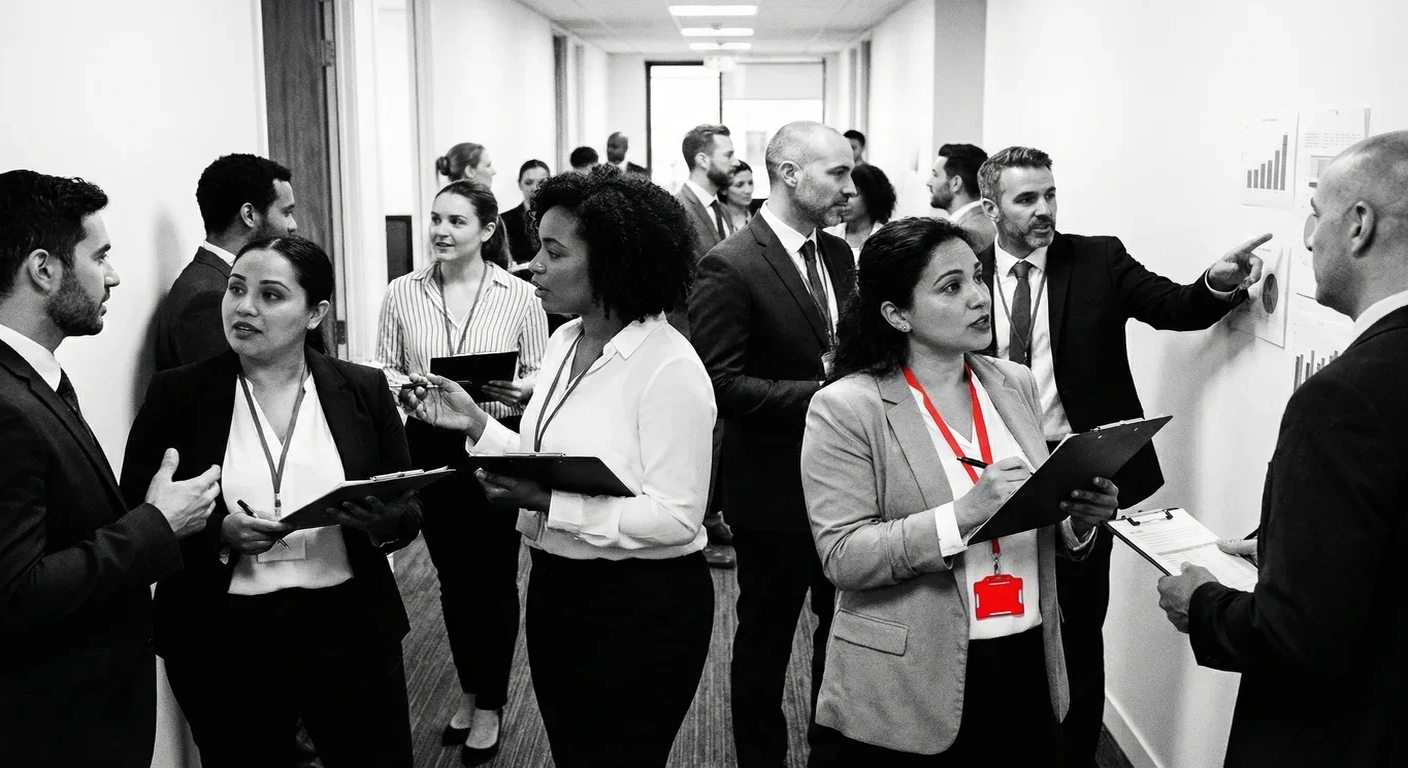
Why Workplace Psychological Testing Has Become Non-Negotiable for HR Teams
Think about the last bad hire your organisation made. What did it cost? Onboarding, training, lost productivity, team morale. The U.S. Department of Labor estimates the average cost of a bad hire at 30% of the employee's first-year salary. For a £50,000 role, that is £15,000 gone.
Workplace psychological testing is not a luxury. It is a risk management tool. When used correctly, psychometric evaluation gives HR teams an objective layer of data that interviews simply cannot provide.
Key point: A structured psychological assessment predicts job performance up to three times more accurately than an unstructured interview, according to research published in the Journal of Applied Psychology.
The Gap Between What HR Teams Measure and What Actually Matters
CVs measure the past. Interviews measure confidence. Neither measures how someone will actually behave under pressure, in a team, or when managing a deadline crisis.
Psychological assessments in the workplace measure cognitive patterns, personality traits, and stress responses. These are the variables that determine whether someone thrives or quietly disengages after six months.
- What CVs reveal: Previous job titles and tenure
- What interviews reveal: Verbal fluency and first impressions
- What psychometric evaluations reveal: Decision-making style, emotional regulation, team compatibility
The Numbers HR Directors Cannot Ignore
Data matters here. These figures come from peer-reviewed research and industry studies published between 2019 and 2024.
- 55% — improvement in hiring accuracy when psychometric tools are added to the selection process (Aberdeen Group)
- 75% of Fortune 500 companies use some form of psychological or psychometric assessment in their recruitment process (Harvard Business Review, 2022)
- 39% reduction in early employee turnover reported by organisations using structured pre-hire assessments (Gallup, 2023)
- 2.6x — candidates assessed with validated tools are 2.6 times more likely to exceed performance expectations in their first year (SHRM)
- £9 billion — estimated annual cost of poor hiring decisions to UK businesses (CIPD, 2023)
Who Is Actually Using These Tools Right Now?
Not just large corporations. Mid-sized businesses in logistics, healthcare, financial services, and professional services are integrating employee assessments into every stage of the talent lifecycle — from recruitment to promotion decisions.
The HR director at a 200-person manufacturing company recently described it plainly: "We stopped hiring for skills and started hiring for behaviour. The skills we can train. The behaviour is far harder to change."
"The best predictor of future behaviour is past behaviour — but only when you know how to measure it." — Industrial-Organisational Psychology consensus, replicated across 85 years of workforce research.
Defining Psychological Assessments in the Workplace: What They Are and What They Are Not
The term gets misused constantly. A casual personality quiz is not a psychological assessment. A validated psychometric evaluation built on peer-reviewed frameworks is something entirely different.
Understanding the distinction protects your organisation legally and ensures your HR data is actually worth acting on.
Three Categories Every HR Professional Should Know
Workplace psychological assessments broadly fall into three evidence-based categories. Each serves a different purpose in the employee lifecycle.
- Personality assessments — Based on validated models such as the Big Five or MBTI. These measure stable behavioural tendencies that predict how someone works, collaborates, and leads.
- Cognitive ability assessments — These measure reasoning speed, problem-solving capacity, and learning agility. Strong predictors of performance in roles requiring analytical judgment.
- Situational judgment assessments — These present realistic workplace scenarios. They evaluate how a candidate or employee would respond to specific challenges relevant to the role.
Attention: Not all assessments are legally compliant in every jurisdiction. UK HR teams must ensure any psychometric tool used in hiring meets the standards outlined by the British Psychological Society (BPS) for occupational test use. Using a non-validated tool in a hiring decision can expose your organisation to discrimination claims.
The Difference Between Clinical and Occupational Psychological Testing
This confusion causes real problems in organisations. Clinical psychological testing is administered by licensed psychologists to diagnose mental health conditions. It is not appropriate for workplace use in recruitment or performance management.
Occupational psychometric evaluation is designed specifically for the workplace context. It measures work-relevant traits — communication style, resilience, decision-making — without venturing into clinical territory. This is what HR teams should be using.
The distinction matters for employee trust, too. When employees understand that an assessment measures professional behaviour rather than probing personal mental health, participation rates and honest responses both increase significantly.
What Validated Actually Means in Practice
A validated assessment has been tested on large, representative populations. Its results consistently predict what it claims to predict. It has been reviewed independently. It produces stable results when the same person takes it under similar conditions.
This is not a minor technical detail. An unvalidated assessment produces noise, not signal. Acting on noise wastes your hiring budget and creates legal exposure.
Key point: When evaluating any assessment provider, ask for their validation studies, reliability coefficients, and evidence of criterion validity. A credible provider will share this data without hesitation.
How SIGMUND Psychological Assessments Support Smarter HR Decisions
Knowing the theory is one thing. Having access to tools you can actually deploy on Monday morning is another.
SIGMUND's platform provides scientifically validated workplace psychological assessments built for HR teams who need reliable data quickly. No PhD in psychometrics required. Results are presented in plain language with direct recommendations your team can act on.
Whether you are screening candidates at volume, developing a high-potential employee, or diagnosing a recurring team conflict, the right assessment changes the quality of your decision.
- For recruitment: Explore the recruitment assessment tools designed to reduce bias and improve candidate quality from the first screening stage.
- For team development: The validated personality assessment identifies communication preferences and collaboration styles that explain why some teams perform and others stall.
- For a complete overview: Browse the full range of available tools before committing to any single assessment type.
You do not need to overhaul your entire HR process to start. One well-chosen assessment, applied consistently, produces measurable results within a single hiring cycle.
Explore SIGMUND HR AssessmentsAlready using psychometric tools and want to expand your framework? Browse the full SIGMUND test catalogue to find assessments matched to your specific HR objectives.

Psychological Assessments in the Workplace: From Data to Decisions
You have the data. Now what do you do with it?
Most HR teams stop at the score. They read the report, nod, and file it away. That is where the value disappears. Psychological assessments at the workplace only generate ROI when they drive a concrete next step.
Here is how to close that gap.
Turn Assessment Results into Hiring Decisions
A psychometric evaluation is not a verdict. It is a structured input. The difference matters.
When a candidate scores low on emotional regulation, that does not disqualify them. It tells you to probe that specific area during the interview. Ask a behavioral question. Look for patterns. The assessment points the way. The conversation confirms it.
Three rules for using assessment data in hiring:
- Rule 1. Never use a single score as a binary filter. Combine it with structured interview data.
- Rule 2. Define your benchmark before you assess. What does a high-performer in this role actually look like?
- Rule 3. Document your rationale. Assessment-backed decisions are defensible decisions.
Use Workplace Psychological Testing to Build Better Teams
Hiring is only half the equation. What happens after day one?
Employee assessments reveal how people think, collaborate, and process stress. That intelligence is directly usable by any manager. A team of four people with identical technical skills can fail spectacularly if they all share the same blind spot under pressure.
"Teams that use personality and cognitive data in their onboarding process report 23% faster time-to-productivity compared to those relying on informal observation alone." — SHRM Workforce Insights, 2023
Practical applications for team development:
- Onboarding: Share relevant soft skills profiles with the new hire's manager on day one.
- Conflict resolution: Use Big Five or MBTI data to reframe disagreements as style differences, not personal failures.
- Succession planning: Map cognitive and leadership potential across your existing team before you post an external job offer.
Mental Health in the Workplace: What Assessments Can and Cannot Do
Let us be precise here. Psychometric evaluations are not clinical diagnostic tools. They do not replace a psychologist. They do not detect depression or anxiety disorders.
What they can do: identify stress tolerance, emotional reactivity, and resilience indicators at a behavioral level. That is actionable for HR. It informs coaching conversations. It signals who may need additional support during organizational change.
Attention: Using psychological assessment data to label employees as mentally fragile or at-risk without clinical support is both ethically problematic and legally risky in most jurisdictions. Always pair data with human judgment.
The boundary is clear. Assessments inform. They do not diagnose.
How to Choose the Right Psychometric Evaluation for Your Organization
There are hundreds of tools on the market. Most HR teams pick the one their previous company used. That is not a strategy.
Ask these four questions before you commit to any workplace psychological testing solution:
- Is it validated? Published validity studies, peer-reviewed if possible. Ask the vendor directly.
- Is it relevant to your context? A tool designed for clinical populations may not predict performance in a sales environment.
- Can you benchmark against your own data? The best tools let you compare candidates against your top performers, not generic norms.
- Is the output actionable? If a recruiter cannot read the report in under five minutes and know what to do next, it is the wrong tool.
Key point: A 2022 study published in the Journal of Applied Psychology found that structured, validated employee assessments predict job performance nearly twice as accurately as unstructured interviews alone (r = 0.51 vs. r = 0.28).
Cognitive Ability vs. Personality: What Should You Prioritize?
Short answer: both. But at different moments.
Cognitive assessments — numerical reasoning, verbal comprehension, logical deduction — predict learning speed and problem-solving capacity. They are strongest at the screening stage, especially for roles requiring quick adaptation.
Personality assessments — Big Five dimensions, behavioral styles — predict how someone will work, not just whether they can. They are most useful during final-stage evaluation and onboarding.
The most reliable approach combines both. Research by Schmidt and Hunter (1998), still cited in industrial-organizational psychology curricula, showed that cognitive + personality data together explain up to 58% of job performance variance. That number has not been meaningfully surpassed since.
Bias, Fairness, and Legal Considerations
This is the conversation most vendors skip. You should not.
Any assessment used in hiring can create adverse impact if it disproportionately screens out protected groups. In the UK, the Equality Act 2010 applies. In the US, EEOC guidelines govern this directly. Validation studies must include diverse populations.
Four questions to ask your assessment provider:
- Adverse impact data: Has the tool been tested for differential outcomes across gender, ethnicity, and age?
- Norm groups: Who was included in the standardization sample?
- Audit trail: Can you document the assessment's role in each hiring decision?
- Candidate transparency: Are candidates informed about how their data will be used?
Digital-First Assessment: What Has Changed Since 2020
Remote hiring changed the rules. Proctored in-person testing gave way to browser-based, asynchronous formats. The core psychometrics did not change. The delivery context did.
Key developments worth knowing:
- Adaptive testing: Items adjust in difficulty based on prior responses, reducing completion time by up to 40% while maintaining precision.
- Integrity checks: Modern platforms embed response consistency metrics to flag random answering or coached responses.
- Integration: Most enterprise ATS platforms now accept direct score imports. Manual data entry is no longer acceptable at scale.
Explore the full range of validated options available through SIGMUND's test catalogue to compare formats and methodologies before you decide.
Workplace Psychological Testing: Your Action Plan for the Next 30 Days
Reading an article does not change anything. Implementing one thing does.
Here is a realistic 30-day action plan for HR teams that want to use psychological assessments properly — not just technically.
Week 1: Audit What You Already Have
Most organizations are already using some form of assessment. The problem is fragmentation. Three different tools, three different vendors, zero shared interpretation framework.
- List every assessment currently used across recruitment, onboarding, and development.
- Identify which ones have published validity data and which do not.
- Map who in the organization is trained to interpret results — and who is improvising.
Week 2: Define Your High-Performance Benchmark
Who are your top 20% of performers in each key role? What do their assessment profiles look like?
If you have not built that benchmark, you are assessing candidates against a theoretical standard. That reduces predictive accuracy significantly. Internal benchmarking is where the real ROI lives.
Key point: Organizations that build role-specific benchmarks from internal performance data report a 31% reduction in early attrition within the first year of implementation, according to a 2021 Talent Board study.
Week 3–4: Pilot One New Process Change
Do not overhaul everything at once. Pick one role. One hiring cycle. Introduce a structured assessment at a defined stage. Debrief the hiring manager afterward. Measure the outcome at 90 days.
That single data point will tell you more than any vendor case study.
The SIGMUND recruitment assessment suite is designed exactly for this kind of structured, role-specific piloting — with results that hiring managers can read and act on immediately.
Employee Assessments: Frequently Asked Questions
No. They are not legally required in most jurisdictions. However, using them creates a documented, defensible hiring process. In regulated industries — financial services, healthcare, aviation — structured psychometric evaluation is considered best practice and increasingly expected by regulators and audit bodies.
A standard psychometric battery combining cognitive and personality dimensions typically takes 25 to 45 minutes for candidates. Adaptive formats reduce this to under 30 minutes without reducing reliability. Reports are generated immediately in most modern platforms. Total time investment for HR is under 10 minutes per candidate when interpretation frameworks are pre-built.
Personality assessments can be influenced by impression management. Modern tools include social desirability scales and response consistency checks to detect this. Cognitive assessments are harder to manipulate — preparation helps only marginally, as they measure underlying processing capacity. The most robust batteries combine both and flag statistically improbable response patterns automatically.
A psychometric evaluation measures behavioral tendencies, cognitive styles, and personality dimensions for professional purposes. It is not a clinical instrument. A mental health assessment is conducted by a licensed clinician to identify, diagnose, or monitor psychological disorders. Using workplace psychological testing to make inferences about clinical mental health status is both methodologically invalid and ethically inappropriate.
Track four metrics: time-to-productivity for new hires, 90-day retention rate, hiring manager satisfaction scores, and internal promotion accuracy. Compare cohorts hired with and without structured assessment. Most organizations see measurable ROI within two to three hiring cycles. The Society for Human Resource Management estimates the cost of a bad hire at 50–200% of annual salary — even a 10% improvement in selection accuracy justifies the investment.
Ready to make smarter hiring decisions?
Discover SIGMUND's psychological assessment tools — validated, objective, and immediately actionable for HR teams.
Explore HR AssessmentsFrequently Asked Questions
📚 Related articles
- →Explore how online psychometric testing can significantly enhance employee well-being and optimize talent management in your organization.
- →Learn about essential managerial skills assessment tools that can improve leadership capabilities and promote a healthier workplace environment.
- →Discover strategies for reducing bias in recruitment processes, which can lead to a more inclusive and supportive workplace.
- →Understand the importance of validity and reliability in psychometric testing to ensure effective employee assessments that support well-being initiatives.
Explore the SIGMUND Test Catalog
Discover our comprehensive range of scientifically validated psychometric tests