
Luke SIGMUND Consultant
×
Pre-Employment Personality Test Benefits for Smarter Hiring and Reduced Risk
You hire fast. Then reality arrives. A pre-employment personality test can expose what the CV hides and what the interview cannot prove.
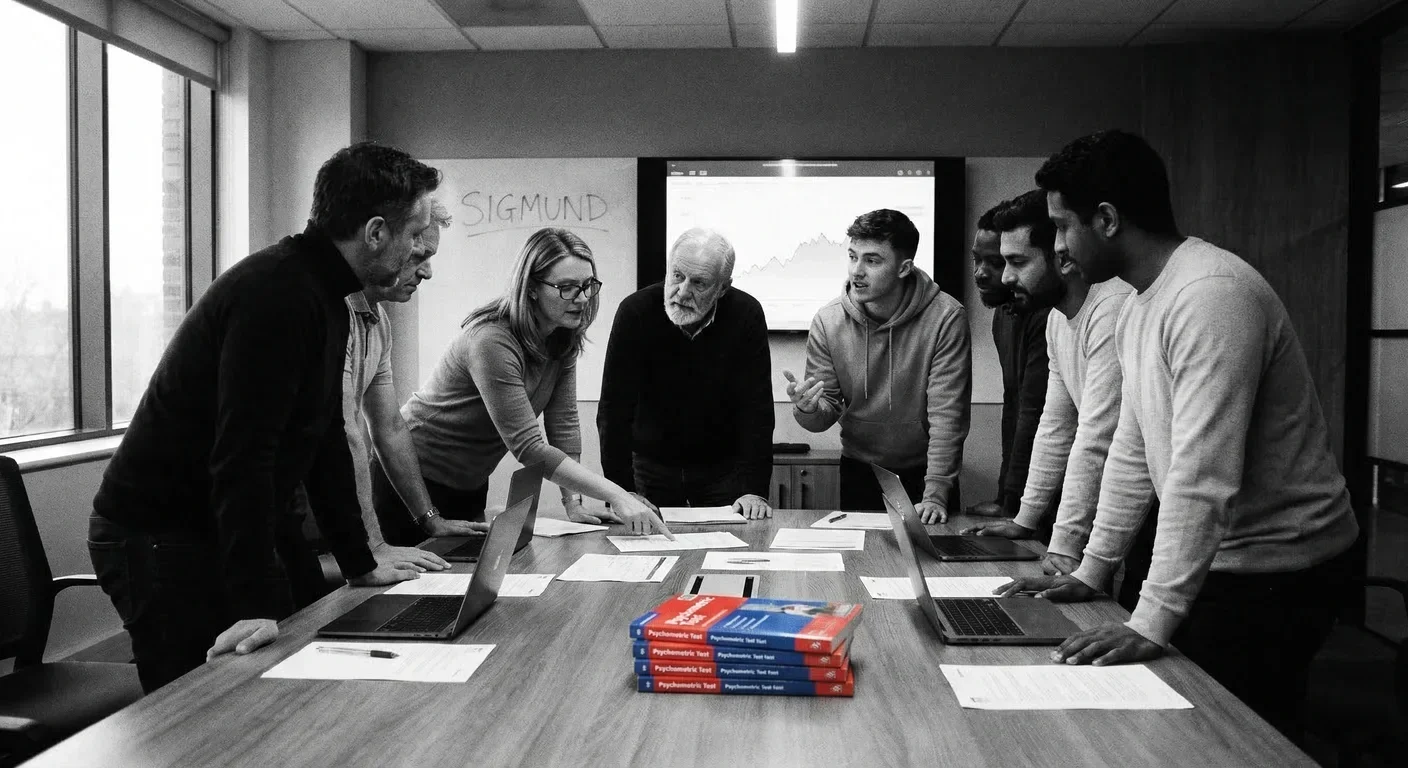
Pre-employment personality test benefits: what are you really buying?
When people say pre-employment personality test benefits, they often mean one thing: less guesswork. That is the point. A personality test does not predict a future with magic. It describes stable tendencies. It shows how someone tends to act, work, react, and cooperate. That is useful when the role is demanding, the team is busy, or the cost of a bad hire is high.
In daily HR work, the pattern is familiar. The CV looks strong. The interview feels smooth. Then the new hire struggles with pace, structure, or conflict. A personality assessment adds another layer. It gives you data beyond self-presentation. The recruitment tests page shows how structured assessments can support clearer hiring decisions.
This is not about replacing human judgment. It is about improving it. The best use is simple. Ask better questions. Compare answers with job demands. Then decide with more certainty.
Point cle : A personality test does not replace the interview. It gives the interview a spine.
What the test measures, and what it does not
A pre-employment personality test measures tendencies. It does not measure mood on one bad Monday. It usually looks at traits such as conscientiousness, sociability, emotional stability, openness, and cooperation. These traits matter because work is rarely only technical. Work is also pace, pressure, feedback, and interaction.
According to the Canadian Psychological Association, many personality inventories use between 50 and 350 statements. That means the format stays fast, while still giving a useful view of behavior. In practical terms, this can help a hiring manager see why one person thrives in routine and another performs better in change.
The key question is blunt. Do you want to rely on confidence, or on evidence? If a role needs calm under pressure, the test helps you see whether that calm is real. If the role needs collaboration, the test helps you see whether the person actually works well in a team.
- Use the test to compare stable traits with job needs.
- Use the interview to explore real examples.
- Use both to reduce blind spots.
Why the CV and the interview are not enough
A CV tells you what someone has done. An interview tells you what someone says. Neither fully shows how that person will behave on a hard Tuesday afternoon. That is where personality testing hiring support becomes valuable. It helps you move from impression to evidence.
This matters even more in roles with pressure, repetition, or high contact with others. A candidate may sound polished and still struggle with follow-through. Another may speak less fluently and still deliver strong reliability. That is not theory. It is a common HR problem. The test gives structure to what is often left to gut feeling.
“The most expensive hire is not the one with the highest salary. It is the one who leaves early, disrupts the team, and forces you to start again.”
Pre-employment assessments benefits: why this reduces turnover
One of the clearest pre-employment assessments benefits is lower turnover. When you know how a person tends to work, you are less likely to place them in the wrong seat. That sounds obvious. It is not. Many hiring errors happen because the role looked simple on paper, then turned out to demand a different style of work.
The Society for Human Resource Management notes that a bad hire can cost at least several thousand dollars, and often far more depending on the role. That cost is not only salary. It includes onboarding time, manager time, team friction, and lost output. The ROI of better selection is often strongest in roles with high pressure or frequent collaboration. That is where personality fit matters most.
Turnover is also emotional. A new hire who feels overwhelmed may leave early. A team that loses trust may slow down. A manager then spends time patching problems instead of building results. A structured pre-employment assessment can reduce that risk by making the decision less reactive and more consistent.
The cost of a wrong hire is bigger than most teams think
Cost is not only money. It is speed. It is morale. It is attention. In many teams, one poor hire creates a chain reaction. The manager gives more feedback. The HR team restarts sourcing. The remaining staff absorb the slack. That is why better screening is not a luxury. It is operational hygiene.
Research from SHRM has long linked selection quality with lower turnover and stronger performance. In plain English, better assessment means fewer expensive surprises. It is not about perfection. It is about reducing avoidable error.
Ask yourself one hard question. If this person struggles, will it cost one task, or the whole team? The answer changes how much weight you give to personality data.
Where the gains appear first
The earliest gains usually appear in onboarding, early performance, and manager confidence. If the test shows strong structure needs, the manager can prepare clearer instructions. If it shows lower tolerance for ambiguity, the team can give more context early. If it shows strong collaboration, the hiring team can look for team-facing tasks where that trait matters most.
This is why a good assessment is practical. It helps you prepare for the first 90 days. It helps you reduce surprises. It helps you avoid the classic error of assuming that interview polish equals job readiness.
- Review the role’s pressure points before you assess.
- Compare test results with real tasks.
- Use the results to shape onboarding.
Why Sigmund tests make pre-employment personality testing practical
If you want a tool that fits real HR work, you need clarity, speed, and structure. That is where Sigmund is useful. Its assessments are built to support selection decisions without adding noise. You do not need more complexity. You need a clearer view of the person in front of you.
For roles where behavior matters, the Sigmund personality test can help you anchor the discussion in stable traits rather than vague impressions. That is especially useful when you hire for managers, client-facing roles, or positions with tight coordination. The point is not to label people. The point is to understand how they are likely to work.
Sigmund’s wider HR assessments approach also helps teams create a consistent process. That matters because consistency improves fairness and makes decisions easier to explain. If you want to reduce turnover, you need a process that is repeatable, not improvised.
Attention : A test only helps when the role profile is clear. If you cannot describe the job, the result will not save you.
How to use the result in the hiring process
Use the result as a guide, not a verdict. Compare it with the job’s most important behaviors. Then test those behaviors in the interview. For example, if the role needs autonomy, ask for a real story about self-management. If the role needs resilience, ask how the person handled a period of sustained pressure. The test helps you choose the right questions.
That is the real value of pre-employment personality test benefits. It sharpens the next step. It makes the interview more relevant. It helps the hiring team focus on what the job truly requires.
When you want to go deeper, start with the role, then the traits, then the evidence. That sequence keeps the process clean. It also supports better onboarding, clearer coaching, and faster performance.
How personality testing supports onboarding and early coaching

Point cle : The score is not the prize. The real value is the next decision. Who needs structure? Who needs space? Who learns fast from feedback?
Build the first 90 days on evidence
Personality testing hiring becomes useful the day after the offer. It helps the line manager set the first week, the first 30 days, and the first 90 days. A highly autonomous hire may need clear goals and less supervision. A cautious profile may need tighter rhythm, faster feedback, and smaller milestones. That is not guesswork. That is practical onboarding design. The HR assessments page can help you build that structure.
When the plan is clear, the new joiner feels seen. When the plan is vague, the manager improvises. Which one creates trust? Which one creates confusion? The answer is obvious. And it shows up in the first week.
Use feedback style, not just talent labels
Good pre-employment assessments benefits are not only about selection. They also guide feedback. Some people act fast after one direct message. Some need a written recap. Some want data. Some want the short version. That is why a personality report can support coaching. It gives the manager a better starting point. It does not replace judgment. It improves it.
According to CIPD, structured assessment helps reduce bias in people decisions when it is used with clear criteria. That matters in onboarding too. If the first manager conversation is random, the new hire pays the price. If it is intentional, the person gets traction sooner.
Avoid early mistakes that cost time
Early turnover is expensive. SHRM has repeatedly reported that the cost of replacing a salaried employee can reach six to nine months of salary. That is a heavy bill for a bad start. A pre-hire personality test can help reduce the odds of a poor early fit, not by magic, but by giving the manager a clearer view of likely behaviour under pressure.
What you do not measure often becomes a coaching problem later.
Think about the last time a new starter went silent. Was it lack of effort? Or was it a need for more structure? Better data helps you answer sooner.
What criteria make personality testing hiring useful?
Start with job-linked criteria
A test is only useful when it maps to the role. That sounds basic. It is still ignored too often. For a sales manager, persistence and social confidence may matter. For a finance analyst, attention to detail and consistency may matter more. The test should support the role profile, not replace it. That is how you protect fairness and improve quality.
The question is simple. What behaviour helps success in this role? If you cannot answer that in plain English, the test will be noise. If you can, the test becomes a sharper decision tool.
Use validated tools only
Not every questionnaire deserves trust. A serious tool should have evidence, clear norms, and a transparent scoring model. ISO 10667 is a useful reference for assessment service quality. It asks for clear purpose, proper administration, and appropriate interpretation. That protects both the employer and the candidate.
In the UK, the Equality Act 2010 matters. In the US, the EEOC rules matter. A valid tool is not enough on its own. You also need consistent use, job relevance, and a clean process. That is the baseline.
Look for behaviour, not labels
Big Five scales are often more practical than vague labels. They help you compare likely patterns. MBTI can be useful in coaching language, but it should not be treated as a selection engine. The point is not to box people in. The point is to understand risk and support. That is better than a gut feel alone.
- Use one clear competency model.
- Link each scale to a real work behavior.
- Train managers on interpretation.
- Keep the same criteria for every hire.
Which benefits matter most for turnover and ROI?
Lower turnover is the headline benefit
One of the strongest pre-employment personality test benefits is retention. AssessFirst reports that scientific personality tests can reduce turnover by 20 to 30 percent on average across 5,000 client companies. That is a serious ROI story. It is not a vague brand promise. It is an operating result. If your team stops losing the wrong people early, you save time, money, and manager energy.
The Figaro recruiter site also notes that personality testing hiring can reduce the risk of a poor hire and improve cultural alignment. That matters because early departure rarely comes from one issue alone. It is usually a chain. Unclear role. Weak coaching. Bad expectation setting. Then exit.
Improve prediction with a better method mix
Schmidt and Hunter’s meta-analysis is still one of the most cited references in selection science. Their findings show that combining structured interviews with valid tests improves predictive accuracy versus interviews alone. The practical message is simple. Do not rely on one signal. Use several strong ones.
What does that look like in practice? A structured interview. A job-linked personality test. A short work sample. Then a decision based on evidence. That is cleaner. It is also easier to defend if the hiring outcome is later reviewed.
Make the ROI visible to leaders
If the CEO wants numbers, give numbers. If a bad hire costs six to nine months of salary, and a better assessment process reduces early exits, the case is strong. If turnover drops by 20 percent, the savings can fund better coaching, better onboarding, and better manager training. That is why assessment is not a side topic. It is a budget topic.
Attention : A test that is not linked to a clear decision rule can create noise. Use it with structure, or do not use it at all.
How to use the results without making people feel boxed in
Share what is useful, not everything
People do not need a psychological label on day one. They need clarity. Share the work habits that help them succeed. Share the support they are likely to want. Share the risks the manager should watch. That keeps the conversation practical. It also respects the person.
This is where coaching matters. A low-detail report helps no one. A short, specific summary helps everyone. For example: needs a clear plan, reacts well to direct feedback, may need time before speaking in a group. That is usable.
Keep the tone human
People ask one silent question when they see a test result. “Will this define me?” Your answer should be no. The result opens a conversation. It does not close one. It helps the manager adapt style, pace, and support. That is the point.
Use the report as a coaching tool, not a verdict. Use it to ask better questions. What helps you do your best work? What kind of feedback helps you move faster? What gets in your way?
Document the decision path
A clear process protects the employer. It also protects the candidate. Keep notes on job criteria, interview structure, test use, and final decision logic. That does not need heavy bureaucracy. It needs discipline. The result is a process that is faster to review and easier to explain.
- Explain why the test is used.
- Keep the role criteria written down.
- Train managers before launch.
- Review impact on turnover and time to productivity.
What should you do next if you want cleaner hiring decisions?
Start with one role
Do not launch everything at once. Pick one role with a clear performance pattern and a real turnover cost. Build a simple assessment path. Test it. Measure it. Then expand. That is how you earn trust. That is also how you learn what works in your own context.
If you need a role-specific approach, the manager assessment page and the early-career assessment page are useful starting points.
Track the right KPIs
Use a small dashboard. Time to shortlist. Time to hire. Early turnover. Time to productivity. Manager satisfaction. New hire feedback. That is enough to see value without drowning in data. If the numbers improve, keep going. If they do not, adjust the tool or the process.
What gets measured gets managed. But only if the metric is tied to a real decision. Otherwise, it is decoration.
Use the test as a decision aid
The best teams do not worship the test. They use it. They compare behaviour, not stories. They make faster decisions, and they defend them better. That is the real win. A calmer manager. A clearer process. A better first quarter for the new hire.
Ready to reduce early exits and improve onboarding? Start with evidence, not hope.
Ready to transform your hiring process?
Discover SIGMUND assessment tests — objective, science-based, immediately actionable.
Discover the testsFrequently Asked Questions
A pre-employment personality test reduces guesswork, improves hiring confidence, and helps identify how a candidate may work under pressure, collaborate with others, and respond to feedback. It can also lower turnover by revealing fit risks before the offer, not after the first few weeks on the job.
It adds structured evidence to interviews and resumes. Instead of relying only on impressions, recruiters can compare traits such as autonomy, adaptability, and communication style. This makes it easier to spot candidates who match the role, the manager, and the team culture more accurately.
Employers use them to reduce hiring mistakes, save time, and improve retention. A test can show whether a candidate needs structure, independence, or frequent feedback. That insight helps managers choose better hires and support them more effectively from day one.
Most pre-employment personality tests take between 10 and 20 minutes to complete. That is usually long enough to measure important behavioral patterns without creating candidate fatigue. Short, well-designed tests are easier to complete and often deliver more consistent results than lengthy assessments.
An interview shows how a candidate answers in the moment, while a personality test reveals more stable behavioral tendencies. Interviews are useful for motivation and communication; tests are better for comparing work style, structure, and team fit across candidates using a consistent framework.
Personality testing helps managers tailor the first 30, 60, and 90 days. A highly autonomous hire may need clear goals, while another may need more structure and feedback. This improves onboarding speed, reduces friction, and supports better early performance and coaching.
📚 Related articles
Explore the SIGMUND Test Catalog
Discover our comprehensive range of scientifically validated psychometric tests