
Luke SIGMUND Consultant
×
Psychometric Assessment vs AI Screening: Insights from the 2026 Stanford Study
Psychometric assessment vs AI screening Stanford study 2026 is not a theory piece. It is a hiring risk. One tool explains. The other often hides the reason.
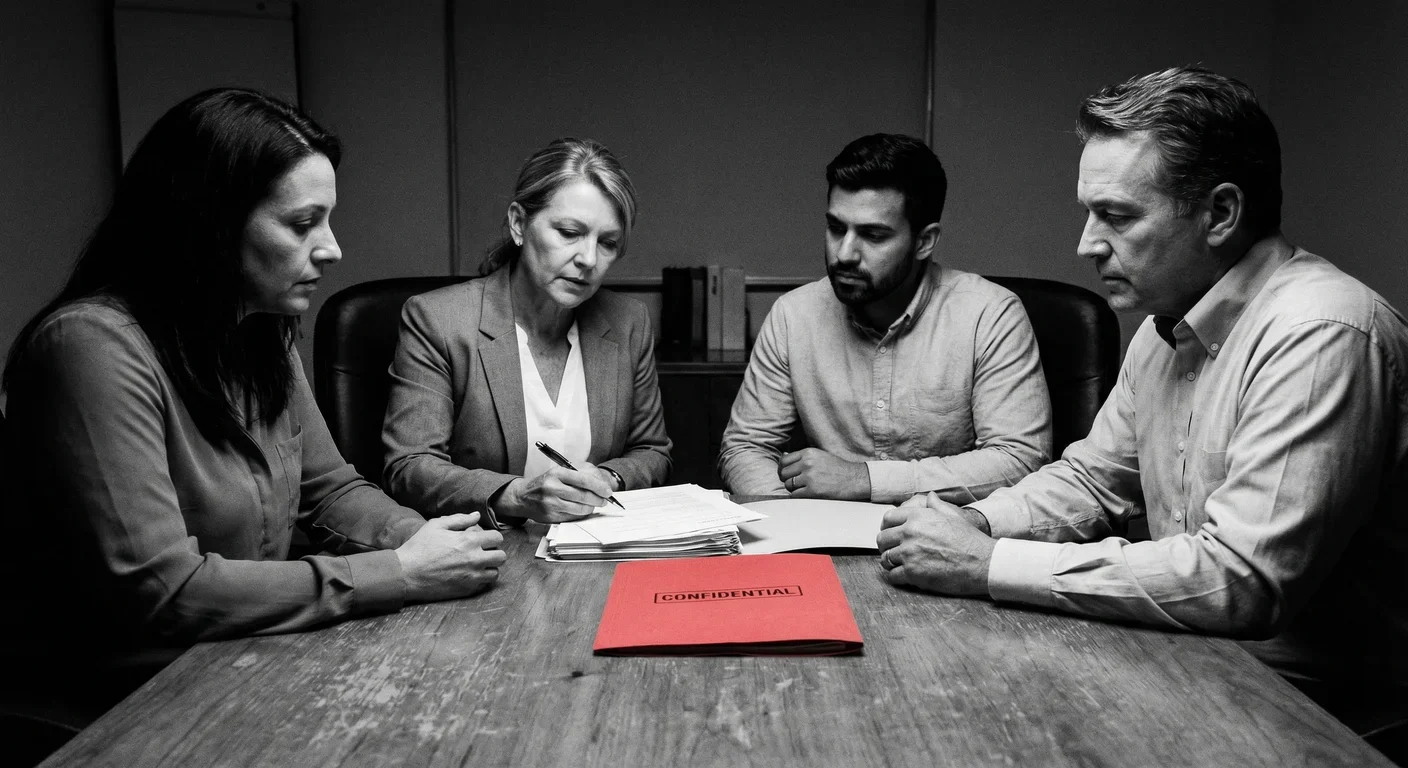
Psychometric assessment vs AI screening Stanford study 2026: what changed?
The Stanford 2026 study puts a hard number on a problem many HR teams feel every week. AI screening can move fast. It can also repeat the same error at scale. In the study context, 4 million applications, 156 employers, and 1,746 positions exposed how automated screening can create adverse impact AI screening patterns that are hard to see and harder to challenge. That is the core issue in psychometric assessment vs AI screening Stanford study 2026. Speed is not fairness. A score is not an explanation.
Ask yourself one direct question. If a strong profile disappears, can your team explain why in plain English? If the answer is no, the process is already weak. A transparent hiring assessment gives the recruiter something to review. A black-box model gives a label. That label may look objective. It is not always fair. The Stanford result matters because it shows how AI hiring bias study 2026 concerns can appear inside normal hiring flow, without drama, without warning, and without a clear audit trail.
Point cle : The more opaque the screen, the easier it is to repeat the same rejection across many applicants.
That is why algorithmic monoculture hiring is a real concern. When several employers use the same logic, the same signals win. The same profiles lose. A candidate who should have passed one gate can be rejected by four systems that all think alike. The result is systemic rejection job applicants. Not because every recruiter decided the same thing. Because the system did.
The study also echoes a wider compliance idea. Hiring tools should be explainable, testable, and defensible. That is close to the spirit of ISO 10667, which focuses on assessment services in work settings. It also aligns with the UK ICO guidance on AI and data protection. If the tool cannot be explained, who carries the risk when a good person is lost?
Algorithmic monoculture hiring: why the same bias repeats
Algorithmic monoculture hiring starts when one model shape spreads across many teams. Same data logic. Same ranking habits. Same failure points. The danger is not abstract. A CV with one unusual career move may be downgraded. A non-linear path may be treated as noise. A strong sales profile may be filtered out because the model overvalues a narrow historical pattern. That is how adverse impact AI screening becomes systemic. It stops being one mistake. It becomes the standard path.
Think about your own process. How many stages rely on the same source of truth? If the first screen rejects a person, do later stages ever see the profile? If not, bias compounds. That is where psychometric assessment vs AI screening Stanford study 2026 becomes practical, not academic. A validated test does not pretend to read everything. It measures a defined trait. It gives the recruiter a result that can be reviewed, compared, and defended.
A model can sort at scale. It cannot claim fairness by itself.
There is a second layer here. Screening systems often inherit past hiring data. Past hiring may already reflect preference, exclusion, or network effects. The model then learns that pattern and repeats it. That is why 25.87 percent of Black applicants and 14.74 percent of Asian applicants appearing in the study context matters. Those numbers are not a footnote. They point to impact. In the US, the EEOC four-fifths rule exists for a reason. It is a reminder that selection rates need to be watched, not assumed.
- OK Map every screen that can remove a candidate before human review.
- OK Compare selection rates by group, source, and stage.
- OK Keep a written reason for each rejection rule.
- OK Review whether the same model logic appears in multiple stages.
Why validated psychometric tests reduce bias in hiring
Validated psychometric tests do one thing better than many AI screens. They measure defined constructs under controlled rules. Cognitive aptitude. Personality. Reasoning. Soft skills indicators. That structure matters. It creates a transparent hiring assessment that a recruiter can read and a manager can discuss. A test does not solve every issue. It does, however, reduce the chance that an opaque model silently deletes a strong profile for the wrong reason.
This is where psychometric assessment vs AI screening Stanford study 2026 becomes useful for day-to-day HR. If you need a benchmark across many applicants, a validated test gives you a common frame. If you need a defensible decision, the score must come with context. If you need inclusion, the process must be visible. The question is simple. Would you rather explain a structured result or defend a black-box label?
Attention : A test is only useful when it is validated, consistent, and used for the right role.
Stanford’s findings also fit a broader evidence base. The SHRM and SIOP communities have both pushed for assessment methods that are job-related and auditable. That is not bureaucracy. It is risk control. A good test should support onboarding, coaching, and later feedback. It should help the team understand potential, not hide behind a score that nobody can defend.
SIGMUND tests: transparent hiring assessment with a clear report
SIGMUND is built for teams that want evidence, not fog. It combines cognitive aptitude, Big Five personality, and a structured recruiter report in one flow. That means less guesswork. More review. More transparency. In a market shaped by AI hiring bias study 2026 concerns, that matters. You do not need a model that speaks in riddles. You need a process that your HR team can explain to the CEO, the hiring manager, and the candidate.
See the platform in action through recruitment tests built for transparent screening and personality testing for hiring decisions. If your team wants a wider view across roles, review HR assessments for structured evaluation. These pages show how a transparent hiring assessment can support selection without hiding the logic behind the result.
- OK Use cognitive aptitude for role-linked reasoning.
- OK Use Big Five to add stable personality context.
- OK Keep recruiter notes inside a report, not in memory.
- OK Review adverse impact AI screening signals stage by stage.
Want a next step that does not hide the method? Explore SIGMUND testing platform
What HR leaders should do now after the Stanford 2026 signal
Start with the process, not the vendor story. Map every screen. Then ask where opacity enters. Is it the CV parser? The ranking model? The final shortlist? If you cannot name the decision point, you cannot control the bias. The Stanford 2026 result is a warning. It says that systemic rejection job applicants can happen even when everyone believes the process is efficient.
Use a simple audit list. Define the trait you want. Name the evidence behind it. Compare selection rates. Keep an explanation note. If the system cannot support that flow, replace it with a transparent hiring assessment. In many teams, that means moving from pure AI screening to validated psychometric assessment vs AI screening Stanford study 2026 logic that is easier to govern and easier to trust.
For ongoing reading, see SIGMUND HR news and analysis. The point is not to reject technology. The point is to stop treating speed as proof. In hiring, fairness is a process. Not a feeling. Not a slogan. A process.
Psychometric assessment vs AI screening Stanford study 2026: why valid tests hold up better
When a rejection cannot be explained in plain English, it cannot be defended. Not to the candidate. Not to a lawyer. Not to an auditor. That is the real issue behind transparent hiring assessment. A validated psychometric test leaves a trail. It records criteria. It supports review. It gives you a benchmark inside your own process. A black-box screen does not do that. It often sorts people without saying why. That is not speed. That is risk.
The difference starts with measurement. A cognitive aptitude test measures a defined construct. A Big Five profile measures stable traits through a known structure. A structured recruiter report adds human context. Together, they create evidence. That matters under ISO 10667, which sets standards for assessment service delivery in work settings. It also matters for EEOC-style review in the US and for UK compliance thinking around fairness and explainability.
What a valid score gives you
A valid score means something consistent. A 72 on cognitive aptitude is not a vague feeling. A Big Five result is not a mood. It is a structured signal. That is why psychometric assessment vs AI screening Stanford study 2026 is not a narrow debate. It is about whether your process can be audited, repeated, and defended. Can you say why one candidate moved forward and another did not? If not, your system is fragile.
- OK Use one scoring scale for each role.
- OK Link each score to a job requirement.
- OK Keep recruiter notes structured.
- OK Review scores against later performance.
Why AI screening changes the logic
AI screening can shift its logic without warning. It sees patterns. It ranks. It filters. But if the logic is hidden, the team cannot challenge the result. That is where adverse impact starts to hide. The Stanford synthesis cited in 2026 points to 4 million applications, 156 employers, and 1,746 positions. Those numbers are not small. They show scale. They also show how fast a hidden rule can shape a hiring funnel.
Point cle: A valid test tells you what was measured. A black box tells you only who was removed.
AI hiring bias study 2026: where adverse impact enters the funnel
The hard point is not AI itself. It is the decision architecture around it. When a system screens applications with no clear rule set, bias becomes invisible. Then it becomes large. The Stanford 2026 synthesis reported that Black applicants were affected at 25.87 percent and Asian applicants at 14.74 percent in the observed screening context. That is exactly why adverse impact AI screening must be treated as a governance issue, not a tech issue.
In the US, the EEOC four-fifths rule is a useful lens. In the UK, ICO guidance pushes teams toward clarity, necessity, and accountability in automated decision paths. If your process cannot explain outcomes in simple terms, it is already weak. The question is direct. Are you saving time, or are you creating systemic rejection for job applicants who might have done well later?
Algorithmic monoculture hiring is real
When many roles use the same hidden model, one mistake spreads everywhere. That is algorithmic monoculture hiring. It feels efficient. It is not. It creates one view of talent across multiple jobs, multiple teams, and multiple markets. If the model dislikes a signal that should not matter, the same mistake repeats. Over and over.
A human reviewer can notice context. A validated assessment can isolate a trait or ability. A black-box screen may not. That is why the best HR teams compare channels, compare cohorts, and compare outcomes. Which source brings the best scores? Which step blocks strong people? Which recruiter report predicts later performance? Those are the questions that matter.
What the Stanford signal should change
Those 4 million applications are a warning. Not because automation is bad. Because automation without transparent rules is dangerous. If you cannot show a defensible reason for rejection, you cannot support review. If you cannot support review, you cannot learn. If you cannot learn, you cannot improve ROI.
A system that cannot explain a rejection is not a selection tool. It is a silent filter.
For more context, see the recruitment tests overview and the personality test page. They show how structured measurement supports fairer decisions.

Three numbers that should change the meeting
- 4,000,000 applications reviewed in the Stanford 2026 synthesis.
- 156 employers covered in the same synthesis.
- 1,746 positions included in the observed sample.
- 25.87% of Black applicants affected in the cited context.
- 14.74% of Asian applicants affected in the cited context.
These figures should not sit in a slide deck and disappear. They should change your operating model. They should push you toward transparent hiring assessment. They should make you ask whether your screening step can survive legal review, candidate review, and internal benchmark review. If not, the process is too fragile for scale.
Psychometric assessment vs AI screening Stanford study 2026: what the evidence says
Point cle : The Stanford study did not find that AI screening beats validated psychometric testing. It found something else. Scale. Bias. Weak external validity. That matters when 4,000,000 applications pass through 156 employers across 1,746 positions.
The main lesson is simple. More data does not mean better selection. The study linked large-scale screening to adverse impact patterns that are hard to ignore. Black applicants were affected at 25.87 percent. Asian applicants were affected at 14.74 percent. That is not a small signal. That is a business risk. If your process rejects strong people early, what are you really buying?
Validated psychometric tests behave differently. They are built to measure stable traits, not to guess from noisy digital traces. That is why Conscientiousness and Openness still matter in talent prediction. The external validity problem is the real issue. A model can look clever in a lab and still fail in hiring.
What the Stanford evidence actually challenges
The study points to algorithmic monoculture hiring. When many employers rely on similar AI logic, the same mistakes repeat at scale. One bad pattern becomes a system. One system becomes a norm. Then the damage spreads across candidate pools, often without clear explanation. Are you screening for performance, or for similarity to past data?
The EEOC four-fifths rule gives a practical lens. If selection rates differ sharply across groups, adverse impact may be present. In the UK, ICO guidance also expects fairness, transparency, and lawful processing. That means a black-box score is not enough. You need evidence you can defend.
- OK Compare selection rates by group.
- OK Test whether the model changes outcomes by source channel.
- OK Keep a written record of the decision logic.
Why valid psychometrics still win
Psychometric tests are not magic. They are just more disciplined. They use known constructs. They have norming. They have reliability checks. They can be audited. That is the difference. A hiring team can explain why a cognitive aptitude score matters for the role. Try doing that with a hidden model whose logic shifts after each retrain.
For HR leaders, the question is not whether AI is modern. It is whether the method predicts job performance better than chance and does so fairly. The Stanford study suggests AI screening is still behind on transparent hiring assessment. That is why many teams are moving back to structured evidence.
Sources such as the EEOC and the ICO both push employers toward defensible selection practices. That is not theory. That is the floor.
AI hiring bias study 2026: where black-box screening fails
The 2026 reading is uncomfortable. AI can reduce some forms of human prejudice, yet still create new ones. That is the paradox. In a screening flow, the model may rank people on proxies. Word choice. Resume structure. School patterns. Career interruptions. None of those are clean measures of ability. They are shortcuts. Shortcuts can be useful. They can also be brutal.
In the 2023 Frontiers in Psychology article, machine learning systems used for psychometric inference showed average accuracy rates from 50 percent to 90 percent, depending on the percentile threshold used to split emotional intelligence scores. That spread tells you a lot. Model performance is not stable across settings. A tool that looks strong at one threshold may weaken at another. A selection process built on such variation is fragile.
The three failure modes that matter most
First, the model can overfit the training data. It learns past patterns, not future success. Second, it can amplify adverse impact because proxy signals are unevenly distributed across groups. Third, it can hide the reason for rejection, which kills trust with applicants and recruiters alike. Do you want speed, or do you want a process you can explain?
A systematic review in arXiv found that many AI psychometric products do not meet formal standards such as norming, factor analysis, or generalization studies. That is a major issue. A score is not a test just because it is numeric. It needs validity. It needs fidelity. It needs fairness. Without that, it is just a number with branding.
- OK Ask for validation evidence before any pilot.
- OK Review subgroup outcomes, not only global accuracy.
- OK Demand a human-readable reason code for each recommendation.
What a safer process looks like in practice
Safe hiring assessment is not about removing technology. It is about putting evidence first. Use structured job analysis. Define the success criteria. Then choose tools that measure relevant traits in a transparent way. That is where validated psychometric methods remain stronger. They tell you what was measured, why it matters, and how the score was built.
If your current stack is opaque, compare it to a benchmark that includes explainability, audit trail, and subgroup stability. That is what a mature talent acquisition team does. It does not outsource judgment to a black box. It uses tools that can survive legal and ethical review.
For a closer look at transparent methods, see structured recruitment tests and validated personality testing.

Transparent hiring assessment: how Sigmund avoids black-box risk
Transparency is not a slogan. It is an operating rule. If a hiring tool cannot be explained to the DRH, the CEO, and a candidate in plain English, it is too risky. Sigmund takes a different path. It combines cognitive aptitude, Big Five personality measurement, and a structured recruiter report. That gives HR teams a clear line from score to decision. No mystery. No hidden weights. No vague AI theater.
This matters because the strongest tools are not the most automated ones. They are the most defensible ones. When onboarding decisions, coaching plans, or role changes depend on the first-screen result, you need more than a ranking. You need context. You need evidence that the score means something across groups and across roles.
Why transparency changes the quality of hiring
Transparent hiring assessment lets teams compare candidates on the same basis. That reduces noise. It also improves feedback quality. A recruiter can explain why a candidate advanced, what trait was measured, and how it links to the job. That is better for the candidate experience. It is better for employer brand. It is better for ROI.
It also supports better internal governance. The audit trail is visible. The logic is documented. The result is easier to defend in a review. That is a real advantage over tools that rely on hidden scoring. If the method cannot be inspected, can it be trusted?
A score without explanation is a liability. A score with evidence is a management tool.
What HR teams should demand now
Start with a simple standard. Ask whether the tool can show validity evidence, subgroup results, and a documented decision rule. Then ask whether the output can be understood by line managers. Finally, ask whether the vendor can support a benchmark against role performance after six months and after one year.
For teams that want a clear audit path, the platform page is a useful reference: the Sigmund testing platform. It is built for transparency, not for magic. That is the point. In hiring, clarity beats noise.
- OK Use tools with documented validity and fairness evidence.
- OK Keep recruiters in the loop.
- OK Review decisions after hire, not only before hire.
Psychometric assessment vs AI screening Stanford study 2026: what to do now

Start here. Not with speed. Not with hype. Start with risk. The Stanford study scale matters because it makes the problem visible: 4 million applications, 156 employers, and 1,746 positions. That is not a corner case. That is a system. When AI screening drives early rejection, the damage is fast and silent. The question is simple. Can you explain why one person passed and another did not?
The safest move is not to remove AI from every workflow. The safest move is to stop letting a black box decide alone. Use validated psychometric tests first. Use AI only as support. Then review the result in a transparent recruiter report. That is how you reduce adverse impact AI screening risk without slowing the whole funnel.
A fast decision is not a fair decision. A fair decision is one you can explain.
Point cle: If the tool cannot explain the rejection in plain English, it is not ready for high-stakes screening.
For a practical benchmark, compare your current process with Sigmund recruitment tests and Sigmund personality testing. Then ask one hard question. Would you defend this process in front of a regulator, a CEO, and the candidate?
Three bias findings from the Stanford study that HR should not ignore
The Stanford study points to a pattern, not a glitch. The first issue is systemic rejection job applicants face when screening models learn from past decisions. Past bias becomes future bias. That is algorithmic monoculture hiring. Everyone who looks like a “safe” past hire gets more chances. Everyone outside that pattern gets pushed out early.
The second issue is measurable group harm. The study reports that Black applicants were affected at 25.87 percent and Asian applicants at 14.74 percent. Those are not abstract numbers. They are people. They are interviews lost. They are teams that never get built. The EEOC four-fifths rule exists for a reason. If selection rates diverge too much, the process needs a hard review.
The third issue is hidden decision logic. AI systems can rank, filter, and score without giving a clear human reason. That is why the Sigmund HR news page keeps transparency at the center. UK employers also need to watch ICO guidance on automated decision-making. In high-stakes hiring, silence is not neutrality. Silence is risk.
- Review whether one model is over-filtering a protected group.
- Measure pass-through rates by stage, not only final hires.
- Document every rule that changes candidate ranking.
- Compare AI outputs against validated psychometric scores.
What does this mean in practice? Do not ask only whether the model is accurate. Ask whether it is auditable. Ask whether the result survives human review. Ask whether a rejected candidate could understand the basis of the decision. That is where adverse impact AI screening becomes visible.
Why black-box screening fails when the bar is transparency
Black-box tools promise speed. They often deliver opacity. That is the core problem. In a hiring funnel, opacity creates trust debt. Every unexplained rejection adds more of it. The talent acquisition manager then spends time defending the process instead of improving it. That is lost ROI. It also weakens feedback loops, because no one can tell which signal truly mattered.
Validated psychometric tests behave differently. They are built to measure cognitive aptitude, personality, and structured traits. They can be reviewed. They can be benchmarked. They can be aligned with job demands. That is why psychometric assessment vs AI screening Stanford study 2026 is not a simple technology contest. It is a governance contest. Which tool can you explain? Which one can you defend under pressure?
As a reference point, the Sigmund HR assessments approach combines cognitive aptitude and Big Five data with a structured recruiter report. That matters because the report turns scores into action. Not mystery. Not guesswork. Action. The British Psychological Society and SIOP both stress validity, reliability, and fair use. That is the bar. Not “smart-looking.” Valid.
Attention : If a vendor cannot describe model inputs, training data, and error rate, the screening is not transparent enough for high-stakes use.
One more point. AI screening often changes over time. That sounds useful. It is also dangerous. A moving model can create moving standards. Candidates are judged by a process that shifts without notice. In contrast, a validated test gives a stable benchmark. That stability is what legal teams, HR directors, and line managers need.
Validated psychometric tests versus AI screening: where the real value sits
Validated psychometric tests win on trust. AI screening wins on volume. Those are not the same thing. If your goal is to decide who deserves a deeper look, the best system is often the one that can justify the look. That is where psychometric assessment vs AI screening Stanford study 2026 becomes practical. A scientifically validated test can show what it measures. A black box often cannot.
Use a simple comparison. Cognitive aptitude tests help predict how fast someone learns. Big Five measures help you understand work style. Structured recruiter reports turn those results into a shortlist that a human can review. This is better than a CV-only filter because the CV is a history document. It is not a potential document. It does not reveal how someone thinks under pressure.
Here is the daily HR reality. One recruiter has 300 applications. Another has 30. AI can help sort. It should not decide alone. A transparent process needs a common language. That is why the Sigmund testing platform is relevant. It gives structure. It gives traceability. It gives a record that can be audited later.
- Screen with a validated test first.
- Review the score against job demands.
- Use AI only as a support layer.
- Keep a human final decision.
- Store the rationale for audit and feedback.
One external benchmark is enough to see the direction. ISO 10667 focuses on assessment service delivery and requires clear responsibility between provider and buyer. That principle fits this topic perfectly. If the tool is serious, the process is serious. If the process is serious, it is explainable.
A practical hiring assessment roadmap for HR directors
Do not rebuild everything at once. Replace the riskiest step first. Start with the stage where rejection is highest and explanation is weakest. Then add structure. Then measure impact. Then repeat. This is how you reduce adverse impact AI screening without creating extra work for your team.
Use a four-step roadmap. First, define job-relevant competencies. Second, select validated psychometric tools. Third, compare outputs against hiring outcomes. Fourth, review selection rate differences by group, level, and function. If a pattern creates systemic rejection job applicants, stop and revise the model. Do not wait for a complaint to force the review.
What should you ask a vendor? Ask whether the tool is auditable. Ask whether it has a fairness review. Ask whether its scoring logic is documented. Ask whether recruiters can override it. Ask whether the candidate experience is clear. These questions are not theory. They are daily governance.
- Define success with one role scorecard.
- Measure selection rates every month.
- Review adverse impact before scale-up.
- Train recruiters on score interpretation.
- Document the human final call.
For HR teams that want an easy start, a psychometric-first process is simpler to defend than a machine-first process. It is also easier to explain to the CEO. That matters when the question is not only speed. It is fairness. It is ROI. It is reputation.
The conclusion HR leaders can use in the next hiring cycle
The lesson is clear. AI can assist screening. It should not own it. The Stanford study makes the risk visible. The validation literature makes the safer path visible. If you want fewer false rejects, fewer hidden biases, and less legal exposure, use psychometric tests as the anchor. Then use AI as a support layer, not the judge.
Sigmund stands out because it combines cognitive aptitude, Big Five, and a structured recruiter report in one transparent workflow. That is the point. Not more noise. More clarity. Not a black box. An auditable process. That is what modern hiring needs when stakes are high and time is short.
The final question is not technical. It is managerial. Do you want a process that looks smart, or one that can stand up to scrutiny? The answer should guide every tool you buy.
Ready to transform your hiring process?
Discover SIGMUND assessment tests — objective, science-based, immediately actionable.
Discover the testsFrequently Asked Questions
Psychometric assessment measures stable traits such as reasoning, judgment, and personality with validated tests. AI screening ranks or filters candidates from resumes, profiles, or video signals. The key difference is explainability: psychometric tests provide clearer evidence, while AI often makes decisions with limited transparency.
The Stanford 2026 study matters because it shows bias risk at scale, not as a rare edge case. With 4 million applications, 156 employers, and 1,746 positions, the findings highlight how early automated screening can silently affect thousands of hiring decisions.
AI screening can create bias when models learn from past hiring patterns, which may already reflect unequal outcomes. It may favor certain keywords, schools, or backgrounds while rejecting qualified candidates. Because the logic is often hidden, teams may not know why a person was excluded.
Validated psychometric tests reduce bias because they measure job-relevant abilities using standardized questions and scoring rules. Every candidate is assessed on the same criteria, which improves consistency. They also create an audit trail, making it easier to justify decisions and compare applicants fairly.
Explainable screening shows why a candidate scored well or poorly, usually through defined competencies and scoring criteria. Black-box screening produces a result without a clear rationale. In hiring, explainability matters because it supports fairness reviews, legal defensibility, and better candidate experience.
Companies should use AI screening as a support tool, not the final decision-maker. Pair it with validated psychometric assessments, human review, and clear score explanations. Regular bias audits, documented criteria, and sample checks on rejected candidates help reduce risk and improve hiring quality.
Test Your Mastery of Psychometric Assessment and AI Screening in Hiring
Measure how well you can balance speed, fairness, explainability, and defensibility in modern recruitment decisions.
10 questions · ~2 minutes
📚 Related articles
Test Your Mastery of Psychometric Assessment and AI Screening in Hiring
Measure how well you can balance speed, fairness, explainability, and defensibility in modern recruitment decisions.
10 questions · ~2 minutes
- →Explore the future of AI-powered psychometric assessments and their impact on recruitment.
- →Discover the latest trends in AI psychometric testing and how they are transforming hiring.
- →Understand the differences between free and paid psychometric tests for effective hiring.
- →Learn about using psychometric testing for making better hiring decisions in your organization.
Explore the SIGMUND Test Catalog
Discover our comprehensive range of scientifically validated psychometric tests