
A candidate is rejected for their name. Another for being shy. How many great hires are slipping through your fingers because of invisible judgments?

Why Unbiased Hiring Practices Fail Without a System
Your brain uses shortcuts to decide. These are cognitive biases. They distort objective evaluation from the first CV scan. This isn't a character flaw. It's normal human wiring under time pressure.
70% of recruiters admit unconscious bias influences their decisions (Ideuzo, 2023). The cost? Priceless talent lost and homogenous teams. The first step is admitting perfect objectivity doesn't exist. The second is building a system.
Identify the Cognitive Biases in Recruitment Sabotaging Your Decisions
You think you're objective. Your brain isn't. It takes automatic shortcuts. Naming them is the first step to neutralizing their power.
The Halo Effect: One Strength Masks Everything
A candidate has a prestigious degree. You instantly assume they're also a great team player. Their CV looks polished? Their application must be strong. You judge the whole from one part. This makes you miss atypical but highly competent profiles.
The Similarity Bias: I Like You Because You're Like Me
You went to the same school. You share a hobby. This candidate feels familiar. So, they must be competent. This bias builds teams of clones. Clones lack the diverse perspectives needed for innovation. A Université Libre de Bruxelles study shows this bias even skews how recommendation letters are written.
The Recency Bias: The Last Interview is the Best
After five interviews, who do you remember? The last one. Or the first. Forgetting the others isn't a fault. It's a recency bias. Your objective evaluation depends on the random order of interviews. That's a problem.
Key Point: These biases aren't personal defects. They're the brain's normal function under pressure. Ignoring them means letting chance decide your hires.
How Standardized Assessment Creates Objectivity
You don't delete biases. You bypass them. How? By imposing an identical framework for every candidate. This is the core of standardized assessment.
Imagine grading an exam. You don't change the questions for each student. You use the same rubric. Recruitment is the same test. The same rubric ensures you compare skills, not impressions.
- Step 1: Define the exact skills needed for the role.
- Step 2: Create a scoring grid for each skill before interviews start.
- Step 3: Ask every candidate the same core questions.
- Step 4: Score answers immediately using your grid.
What is the Role of Psychometric Tests Objectivity?
Interviews test behavior in a high-stress, short scenario. Psychometric tests objectivity measures underlying traits and abilities in a controlled, low-pressure environment. They provide data your gut feeling can't.
They don't replace human judgment. They inform it. They give you a comparable data point for every candidate, leveling the playing field.
"Tools like structured interviews and work samples can increase hiring predictive validity by up to 65% compared to unstructured interviews." — Schmidt & Hunter, Psychological Bulletin
Building Your Fair Recruitment Assessment Center
An assessment center isn't a place. It's a process combining multiple standardized assessment methods. It's your best defense against bias.
Here’s a simple comparison of methods:
| Method | What it Measures | Bias Risk |
|---|---|---|
| Unstructured Interview | Cultural "fit", rapport | Very High |
| Structured Interview | Specific competencies | Medium |
| Work Sample Test | Job-specific skills | Low |
| Psychometric Test | Cognitive ability, personality | Very Low |
The goal is to combine the low-bias methods. Use a structured skills test alongside a personality assessment.
Why SIGMUND Tests Provide a Foundation for Objective Evaluation
Our assessments are designed as a bias-interruption tool. They deliver a consistent, data-driven profile of every candidate, directly measuring the soft skills and cognitive abilities critical for success.
Moving beyond gut feeling starts with a single, reliable data point. Our platform provides clear, actionable reports that complement your human judgment.
Ready to build a fairer, more effective hiring process? Explore Our Recruitment Tests and see how standardized data transforms your candidate evaluation.
For a deeper dive into our full suite of HR tools, browse our complete test catalogue.
Standardized Tests: The Data-Driven Core of Unbiased Hiring Practices
Interviews reveal what candidates say. Standardized assessments measure what they can do. This is the critical shift from opinion to data. A structured recruitment test removes the "gut feeling" variable. Every applicant answers the same questions under identical conditions. The output is a score, not a story.
Think of two managers debating a candidate. One values "culture fit." The other worries about "experience gaps." A cognitive test score cuts through this. It provides a single, comparable metric for problem-solving speed. Or verbal reasoning. No narrative, no bias.
 How Cognitive Tests Create a Level Playing Field
A cognitive ability test measures learning agility. It assesses logic, numerical reasoning, and abstract thinking. Why does this matter for reducing bias? The questions are job-relevant and culture-neutral. They evaluate a universal skill: the capacity to process new information effectively.
Research consistently shows cognitive tests are among the best predictors of job performance across many roles. A meta-analysis by Schmidt & Hunter found they predict performance with a validity of 0.51. This is significantly higher than unstructured interviews (0.38) or years of experience (0.10). Data doesn't have a name or a face.
- Action: Implement a short, role-specific cognitive test as a first screening step.
- Action: Set a minimum threshold score to advance. Apply it to every single candidate.
Key Point: The goal isn't to find the "smartest" person. It's to establish an objective baseline for the cognitive demands of this specific job.
The Role of Personality Assessments in Objective Evaluation
Skills get you hired. Misalignment gets you fired. A validated personality assessment maps stable traits to workplace behaviors. It answers: Will this person thrive in your team's environment?
Models like the Big Five measure traits such as conscientiousness and emotional stability. These are not judgments. They are descriptors of natural tendencies. Does the sales role require high extraversion? Does the compliance role need high detail orientation? The data provides clues.
"Personality assessments don't label people; they map preferences against context. The 'bias' is built into the mismatch, not the measure."
The power lies in the benchmark. You can compare a candidate's profile against your top performers in that role. This moves the discussion from "I like them" to "Their profile matches our success pattern." It's a fundamental change in conversation.
Integrating Tools into a Cohesive, Objective Evaluation Process
Tools alone are dangerous. A test score without context is just a number. The magic is in the structured integration. How do you combine data points to build a complete picture?
Building the Multi-Method Assessment Matrix
Think of it as a three-legged stool. Remove one leg, and it collapses. Your three legs are:
- Structured Interview: Scores on pre-defined competency questions.
- Psychometric Data: Scores from cognitive and personality assessments.
- Work Sample: Performance on a realistic job task or case study.
Each method measures a different facet. Together, they create convergent validity. If a candidate scores high on cognitive tests, articulates clear logic in the interview, and solves the case study, your confidence is high. The data points corroborate each other.
The Calibration Session: Neutralizing Interpretation Bias
Even with data, humans interpret. A hiring manager might dismiss a low personality score because "the candidate seemed really engaged." This is where calibration is vital.
Gather the panel before discussing candidates. Review the assessment benchmarks together. What does a "high" conscientiousness score actually mean for this role? Define it. Then, when reviewing scores, you have a shared language.
Attention: Never reveal assessment scores until after the structured interview. Let the interviewers form an initial judgment based on competency responses, not psychometric labels.
This process forces evidence-based discussion. You move from "I'm not sure about her" to "Her situational judgment score is in the 30th percentile for this competency. Let's look at her interview notes on that point." The bias has fewer places to hide.
For a comprehensive suite of tools designed to work in this integrated way, explore the full SIGMUND test catalogue. Each assessment is built for objectivity from the ground up.
Cognitive Bias Recruitment: The Hidden Saboteurs in Your Hiring Process
Warning: 180 documented biases can distort your hiring decisions. You cannot eliminate them. But you can build systems that neutralize their impact.
Your brain takes shortcuts. Every second. It is not laziness. It is biology. In recruitment, these shortcuts become costly mistakes.
Think about the last CV you reviewed in under 60 seconds. Did you evaluate skills? Or did the university name jump out first? That is anchoring bias.
The Anchoring Trap: First Impressions Rule Everything
Anchoring bias pins your judgment to the first piece of information you see. A prestigious employer on a CV. A confident handshake. A familiar university logo.
Once set, this anchor drags every subsequent evaluation toward itself.
Real-world example: A recruiter sees "Oxford" on a CV. Every answer in the interview now sounds smarter. Every skill seems sharper. The anchor has already done its work.
- Problem: Candidates from elite institutions receive 30% more interview callbacks regardless of actual skill match (Harvard Business Review, 2023).
- Problem: 67% of hiring managers admit their first impression influences the entire interview.
- Solution: Blind CV screening removes names, photos, and institution names before first review.
Stereotyping: When Categories Replace Candidates
Your brain categorizes people instantly. Gender. Age. Background. These categories activate stereotypes before a single word is spoken.
A 2024 McKinsey study found that women receive 40% fewer callbacks in male-dominated industries when names appear on applications. Remove the names. The gap shrinks to 8%.
Key point: Stereotyping is not conscious prejudice. It is automatic pattern-matching. You need automatic counter-measures.
Similarity Bias: Hiring Yourself in Disguise
You like candidates who remind you of yourself. Same university. Same hobbies. Same communication style. This feels like "culture fit." It is often just similarity bias.
The cost? Homogeneous teams. Groupthink. Blind spots that competitors exploit.
"Diversity is not about being different. It is about bringing different perspectives to solve the same problem better."
Companies with diverse leadership teams outperform peers by 36% in profitability (McKinsey, 2023). Similarity bias directly attacks your bottom line.
Confirmation Bias: Seeing What You Want to See
You form a quick impression. Then you search for evidence that confirms it. Everything contradictory gets filtered out.
A recruiter with a "good feeling" after 30 seconds asks easy questions. A recruiter with a "bad feeling" asks harder questions. Same candidate. Different outcomes. That is not evaluation. That is self-fulfilling prophecy.
- Check: Are your interview questions the same for every candidate?
- Check: Do you score answers using a pre-defined rubric?
- Check: Can another recruiter reach the same conclusion from your notes?
If you answered "no" to any of these, your process feeds confirmation bias.
Unbiased Hiring Practices: Practical Solutions That Actually Work
Knowing the biases is step one. Building counter-measures is step two. Here is what works.
Standardized Assessment: The Objectivity Engine
Every candidate answers the same questions. Every answer gets scored on the same rubric. Every score gets compared on the same scale.
Structured interviews are twice as effective at predicting job performance as unstructured ones (University of Michigan research). Why? They leave no room for bias to steer the conversation.
Standardized recruitment assessments take this further. They measure cognitive ability, personality traits, and situational judgment using validated psychometric instruments. No gut feeling. No first impression. Just data.
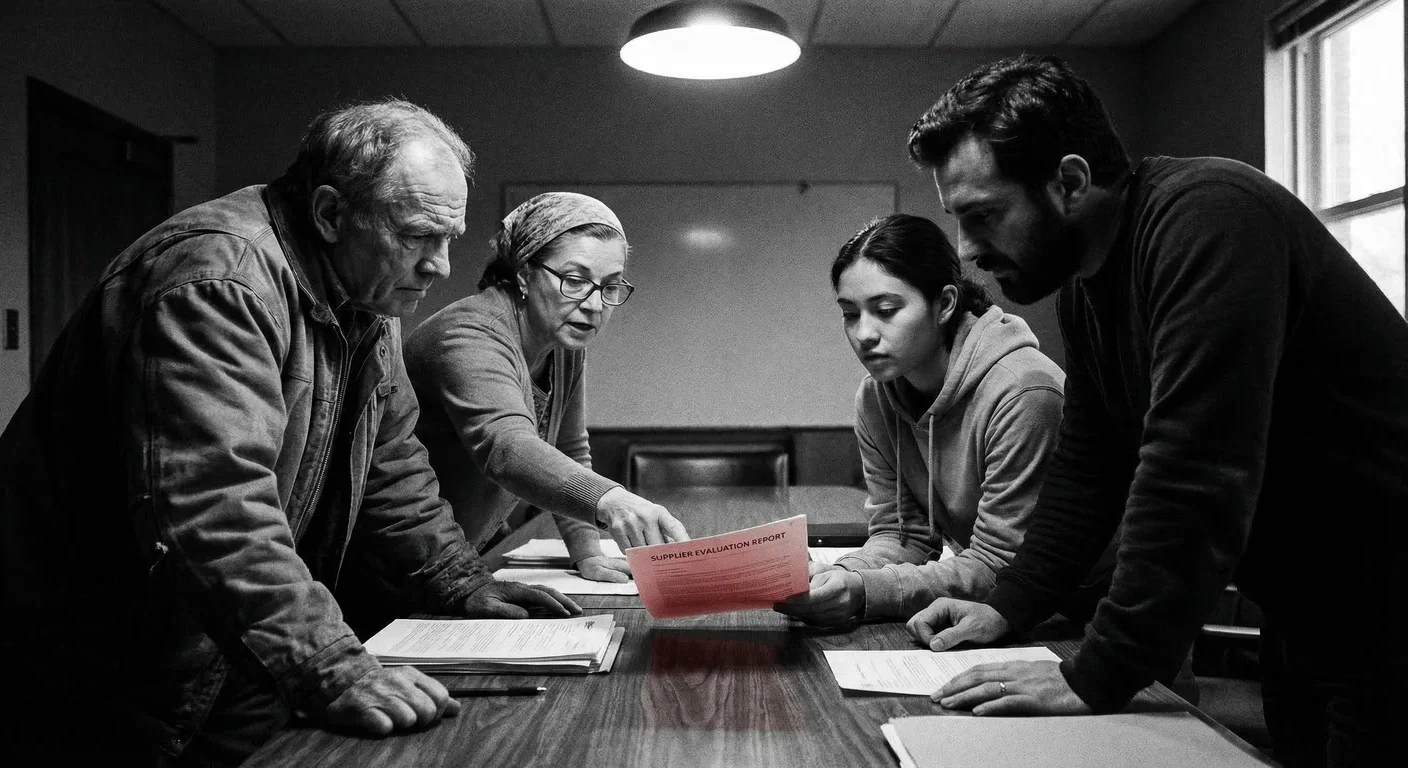
The image below shows how objective criteria transform subjective hiring into measurable evaluation.
Psychometric Tests Objectivity: Measuring What Interviews Cannot
Interviews test how candidates present themselves. Psychometric tests measure how candidates actually think, decide, and behave under pressure.
Key point: A Big Five personality assessment reveals traits that no interview can reliably detect. Conscientiousness predicts job performance across industries. Openness predicts adaptability. Agreeableness predicts team cohesion. These are measurable factors.
Personality assessments like the Big Five offer three advantages over traditional interviews:
- Consistency: Every candidate completes the same validated instrument under identical conditions.
- Predictive validity: Meta-analyses show personality tests predict job performance with 0.22-0.34 correlation (Schmidt & Hunter, updated 2023).
- Bias resistance: Scores reflect traits, not appearance, accent, or background.
Comparative Methods: Which Approach Eliminates Bias Most Effectively?
Not all methods offer equal protection. Some reduce bias partially. Others nearly eliminate it.
| Method | Bias Reduction | Predictive Power | Implementation Cost |
|---|---|---|---|
| Unstructured interviews | Low | 0.20 correlation | Low |
| Structured interviews | Medium-High | 0.44 correlation | Medium |
| Blind CV screening | High (initial stage) | N/A | Low |
| Psychometric assessments | High | 0.22-0.65 correlation | Medium |
| Work samples / simulations | Very High | 0.54 correlation | High |
Sources: Schmidt & Hunter meta-analysis (updated 2023); University of Michigan structured interview research (2024); Sackett et al. personnel selection study (2022).
The best approach combines methods. Blind screening filters first. Structured interviews assess communication. Psychometric tests measure cognitive and personality fit. Work samples prove practical ability.
Complete HR assessment suites bundle these tools into one integrated platform. No patchwork. No gaps. Full coverage from first filter to final decision.
Bias Dashboards: Measuring What You Manage
You cannot fix what you do not measure. Bias dashboards track diversity metrics at every hiring stage.
If 60% of applicants are women but only 10% get hired, your dashboard flags the discrepancy. Where does the funnel leak? Screening? Interviews? Final decision?
- Track: Pass rates by demographic group at each stage.
- Compare: Interview scores across recruiters. Outliers indicate subjective bias.
- Review: Time-to-hire differences. Are some candidates progressing slower without clear reasons?
Warning: Data without action is just noise. Schedule monthly reviews. Assign ownership. Set improvement targets. Otherwise, your dashboard becomes decoration.
Reducing Bias in Your Assessment Center: A Concrete Action Plan

Key Takeaway: Moving from intention to impact requires a system. Objective evaluation isn't an abstract goal. It's a set of concrete, repeatable steps.
Your 5-Step Implementation Checklist
Ready to build a fairer process? Do this. Not next quarter. Start next week.
- 1. Audit Your Current Tools: List every interview guide and scorecard. Do they measure the same core competencies for every candidate? If not, standardize them.
- 2. Introduce a Psychometric Baseline: Add one objective test early in the funnel. A personality assessment provides data before the first conversation.
- 3. Train Your Panel on Bias: Use the SHRM research. Show the video examples. Make bias recognition a required skill for every interviewer.
- 4. Separate "Fit" from "Add": Rewrite "culture fit" criteria. Ask: "What unique perspective does this candidate bring?" Score that answer.
- 5. Measure the Output: Track diversity metrics at each stage. Where do underrepresented candidates drop off? That's your next process break to fix.
Why Standardized Tests Are Your Anchor
Your human judgment is valuable. It's also inconsistent. A structured assessment provides a fixed, fair data point for every single applicant. This is the foundation of unbiased hiring practices.
Think of it like this: you wouldn't measure a room with different rulers each time. Psychometric tests are your calibrated ruler. They create a common language for comparing potential, moving beyond gut feelings. This is how you achieve true objective evaluation.
"Companies using standardized skills assessments are 24% more likely to have employees who exceed performance targets." - LinkedIn Talent Solutions, 2025
Moving from "Culture Fit" to "Culture Add"
The old model hires for comfort. The new model hires for contribution. This shift is critical for innovation.
Important: "Culture add" is not a vague feeling. Define it. Example: "We need someone who challenges groupthink in project reviews." Then, design a behavioral question to probe for that exact trait.
Combine this with data from a standardized recruitment test. Does the candidate's profile show openness to new ideas? Do they have the assertiveness to voice a dissenting view? Now you have evidence, not a hunch.
Your Final, Non-Negotiable Step
You have the playbook. You have the checklist. The risk is doing nothing. The cost of biased hiring is high: lost innovation, higher turnover, and team stagnation.
Don't overhaul everything at once. Pick one step from the checklist. Implement it for your next open role. Measure the difference. That's how real change happens—one objective hire at a time.
Prêt à transformer votre recrutement ?
Découvrez les tests d'évaluation SIGMUND -- objectifs, scientifiques, immédiatement actionnables.
Découvrir les testsFrequently Asked Questions
Reduce assessment center bias by implementing structured interviews, standardized scoring rubrics, and diverse evaluation panels. Use blind CV screening to remove identifying details, apply psychometric tests from vetted suppliers, and train assessors on cognitive biases. These 5 concrete steps transform intention into measurable, repeatable fair hiring outcomes.
Unbiased hiring fails without a system because the human brain relies on cognitive shortcuts that distort objective evaluation from the very first CV scan. Without standardized processes, structured rubrics, and documented criteria, unconscious biases silently influence decisions. A concrete system replaces subjective judgment with repeatable, measurable steps that protect fairness.
Cognitive biases in recruitment are mental shortcuts that cause recruiters to make unconscious judgments about candidates. Examples include rejecting applicants based on their name, shyness, or background rather than skills. These invisible biases distort objective evaluation and cause great hires to slip through the hiring process unnoticed.
Implement objective HR evaluation by using standardized scoring rubrics, blind resume screening, structured interview questions, and validated psychometric tests. Build a 5-step action plan: start next week, not next quarter. Focus on concrete, repeatable steps that move from good intentions to measurable impact on hiring fairness.
Biased recruitment relies on subjective impressions, gut feelings, and unstructured interviews, leading to inconsistent candidate evaluation. Bias-free recruitment uses standardized rubrics, diverse panels, blind screening, and validated assessments. The key difference is systematization: bias-free hiring replaces invisible judgments with documented, repeatable, and objective evaluation criteria.
Choose a psychometric test supplier by comparing quality, cost, and fees across providers. Evaluate test validity, reliability, and regional compliance. Request demos, check client references, and ensure the supplier offers bias-reduction features. Prioritize vendors with proven track records in objective candidate assessment for your specific industry.
Fair hiring is critical because biased processes cause qualified candidates to be rejected for irrelevant reasons like names or personality traits. For HR managers, implementing objective practices reduces legal risks, improves workforce diversity, increases hiring quality, and ensures the company does not lose top talent through invisible, unfair judgments.
Build a bias-free recruitment action plan with a 5-step implementation checklist: standardize interview questions, implement blind CV screening, use validated psychometric tests, train assessors on cognitive bias, and establish diverse evaluation panels. Start next week, not next quarter, to convert fairness intentions into concrete, repeatable hiring results.