
Luke SIGMUND Consultant
×
Evaluating AI Soft Skills Assessment vs Psychometric Testing: Key Insights
AI soft skills assessment sounds clean. Interviews are not clean. If your hires still depend on gut feeling, what are you really measuring?
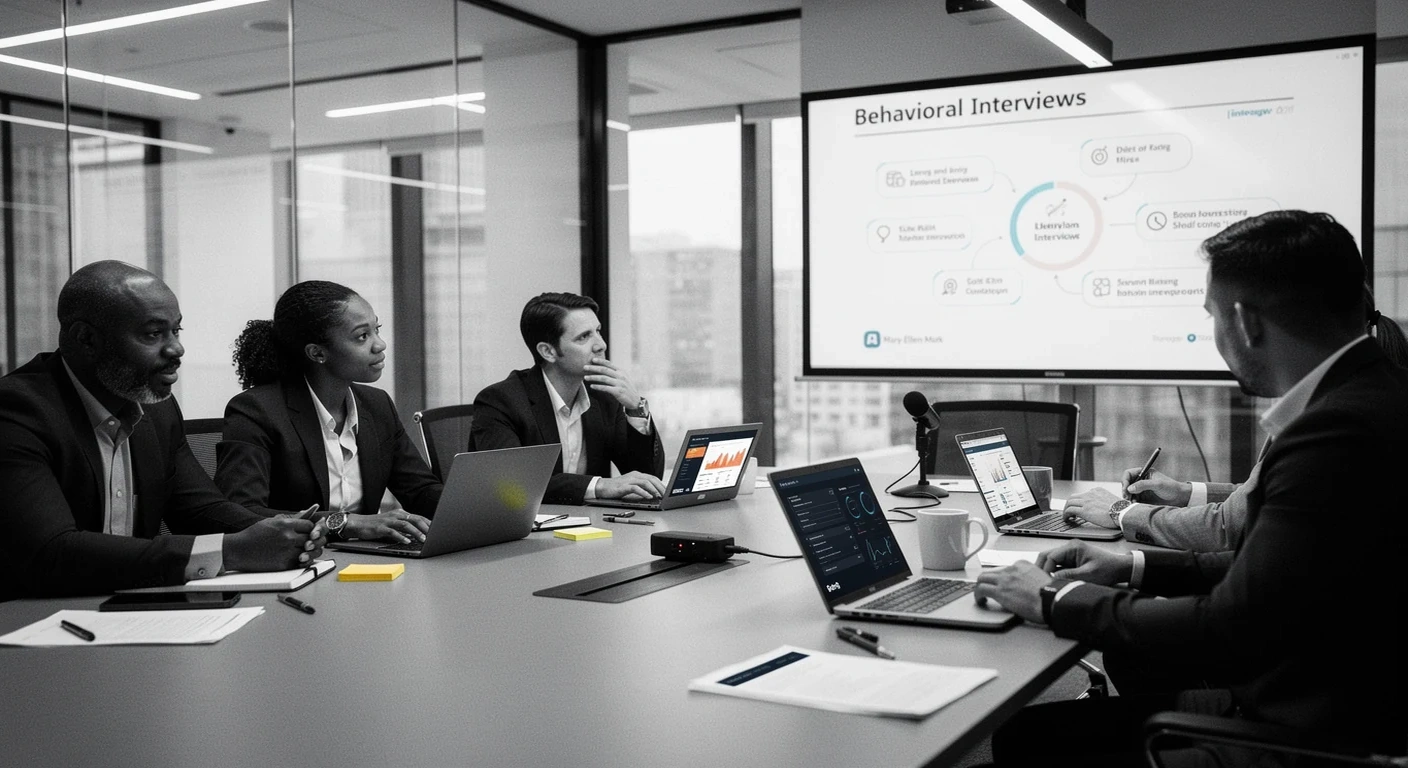
AI soft skills assessment in interviews: why it matters now
Soft skills now move performance. Not a little. A lot. Recent meta-analyses place leadership, adaptation, communication, and emotional intelligence at 40 to 50 percent of the variance in job performance. That is a big number. It changes the game. It also exposes a problem. Traditional interviews still rely on memory, chemistry, and first impressions. That is a weak base for a hiring decision.
In 2026, AI soft skills assessment is not about replacing judgment. It is about reducing noise. The real question is simple. Can you see past charm? Can you separate calm speech from real self-control? Can you tell collaboration from rehearsed politeness?
One common daily case. A manager likes the person who speaks smoothly in the room. Another person gives shorter answers, thinks before speaking, and works better in teams. Who gets the better score? Without structure, the answer depends on the interviewer mood.
Point cle: AI soft skills assessment works best when it corrects human bias, not when it pretends to read the mind.
What soft skills really mean in hiring
Soft skills are visible in behavior. Not in slogans. Leadership shows up when a person takes ownership. Adaptation shows up when a plan changes. Communication shows up when the answer is clear under pressure. Feedback quality matters too. So does self-awareness. These are not abstract ideas. They are observable signals.
That is why the label matters less than the evidence. If a hiring team cannot describe what good looks like, AI will only automate confusion. A better process starts with defined criteria. Then it uses a method that can score them consistently.
Why the traditional interview stays weak
Structured evidence is rare in many interviews. That creates three classic errors. The halo effect. Confirmation bias. And false confidence in “fit.” A confident speaker can get a strong score across the board. A quieter person can get underrated even when the role needs deep work, not performance.
According to the LinkedIn Workplace Learning Report 2024, 89 percent of failed hires within 18 months fail for soft skills reasons, not technical reasons. That is the cost of poor signal.
The Dares also points to transversal skills as a key factor in organisational recovery after 2020. That matters. The workplace changed. The interview room did not always change with it.
AI evaluation soft skills: what the model can see
AI evaluation soft skills works through patterns. It does not need to “feel” the answer. It can examine language, structure, hesitation, consistency, and behavioral markers. In a structured interview, that can help. A lot. But the value depends on the design. Bad prompts create bad scores. Weak questions create weak data.
The best use case is initial screening. Not final judgment. AI can rank answers, flag inconsistencies, and identify evidence of teamwork, adaptability, or resilience. It can also compare candidates against the same rubric. That improves benchmark quality. The point is not to create a robot interviewer. The point is to create a cleaner first layer.
What AI can score well
AI performs better when the signal is concrete. For example: “Tell me about a time when a deadline changed at the last minute.” The model can look for ownership, planning, emotional control, and action steps. It can also detect whether the story stays specific or drifts into general claims.
It is less useful when the question is vague. “Are you a team player?” invites theater. “Describe a conflict and your response” gives data. The quality of AI output depends on the quality of the input. That is not a slogan. That is the core rule.
What AI can miss
AI does not know intent. It can miss sarcasm, context, and cultural nuance. It may reward polished speech over real competence. It may also overvalue verbal fluency. That is risky. Many strong operators are not smooth talkers.
For that reason, AI should never stand alone. A review layer is needed. A human must validate the final shortlist. This is where governance matters. The CNIL guidance on automated decision-making is a useful reminder, even when the legal context changes by market. Human review is not optional when the stakes are high.
What to ask before using AI
- OK What skill is being measured exactly?
- OK Which answer signals count as evidence?
- OK Who reviews the final score?
- OK How do you audit bias over time?
Psychometric vs AI: where each method helps
Psychometric vs AI is not an either-or choice. It is a design question. Psychometric tests bring standardization. AI brings speed and flexibility. One is strong on stable measurement. The other is strong on language-rich screening. Together, they can cover more ground.
Psychometric tools are especially useful when you need reliable trait data. Big Five measures can reveal patterns in conscientiousness, openness, and emotional stability. MBTI is popular in conversation, though it is weaker for selection decisions than evidence-based trait models. AI, by contrast, works well on live answer analysis, especially when the interview is structured and repetitive.
A good process does not ask one tool to do everything.
Where psychometric tests stay stronger
Psychometric tests are built for consistency. They use the same frame for every person. That matters when fairness matters. They are also easier to benchmark across cohorts, roles, and time. If your goal is to compare people at scale, that is a major advantage.
They also help before the interview. That is useful. The interviewer receives data before the conversation starts. The conversation becomes more targeted. Less guesswork. More evidence.
Where AI brings value first
AI is faster when the volume is high. It can process many open answers. It can flag strong examples. It can spot when a candidate talks around the question. That saves time. It also gives the recruiter a more focused shortlist.
For screening, that is often enough. You do not need deep diagnosis at the first step. You need a better filter. That is the practical role of AI soft skills assessment in 2026.
Sigmund tests for soft skills screening: a practical route
If you want an initial layer that is cleaner than a raw interview, use a test-first workflow. Sigmund offers a structured route through HR assessments and the recruitment test platform. That is useful when you need faster screening, better comparison, and less interviewer drift.
This is especially relevant for roles that depend on behavior under pressure. Think team leads. Think client-facing posts. Think managers. If you need a deeper view on leadership behavior, the manager assessment test is a natural next step.
Attention : AI screening without a structured test layer can amplify weak interviews. That creates speed. Not quality.
A simple screening flow
- Define the soft skills that matter for the role.
- Use a psychometric test to set a stable baseline.
- Use AI to analyze structured interview answers.
- Let a human review the final shortlist.
That hybrid model is practical. It is also easier to defend in front of the CEO, the legal team, and the hiring manager. Better process. Better ROI. Better decisions.
For more on tools and method, visit the Sigmund test platform. It gives you a clear path from screening to decision.
AI soft skills assessment: what works in practice?

Point cle : AI soft skills assessment works best when it screens first. Humans decide last. That is the real model.
Look at the numbers. One 2024 study in Annals-CSIS reported correlations of 0.6 to 0.8 between AI scores and structured human ratings for oral communication. It also cut assessment time by more than 50 percent. That is real value. Not hype. Not theory. Still, the same study says demographic bias tests are needed before any final decision. That is the point. Speed matters. So does fairness.
What does this mean for your team? Use AI for the first pass. Let it read transcripts. Let it score speaking patterns. Let it flag clear signals in communication, empathy, and collaboration. Then move to human review. That is safer. It is also easier to defend when a manager asks, “Why did we choose this person?”
- OK Use AI for initial screening of large volumes.
- OK Compare AI output to structured human ratings.
- OK Run a demographic bias test before rollout.
- OK Keep a human in the final decision.
Ask yourself this. Do you want faster decisions, or better decisions? The answer is both. But only if the process is built well. Explore HR assessments that support a cleaner screening flow.
Psychometric vs AI: where does each one win?
Psychometric testing still has a strong place. It gives structure. It gives consistency. It gives a clearer base for comparison across applicants. AI is different. It can process speech, text, and video faster. It can detect patterns at scale. But it is not a full replacement. That is where many teams go wrong. They try to use one tool for everything. That creates risk. A psychometric test can measure stable traits. AI can help observe behavior in an interview simulation. Those are not the same thing.
The SIGMUND angle is simple. Use AI for initial screening. Use psychometric tests for a deeper and more stable view. In 2025, arXiv described a multimodal framework using vision, voice, and NLP. The model reached F1 scores above 0.80 for several soft skills, with demographic performance gaps under 5 percentage points after debiasing. Good result. Still, explainability mattered. That is exactly what psychometric tools add. They make the signal easier to understand.
The best process does not ask AI to replace judgment. It asks AI to reduce noise.
Try this benchmark logic.
- Use AI to rank the first wave of applicants.
- Use psychometric tests to confirm the core profile.
- Use a structured interview for the final shortlist.
That hybrid flow is more robust than either tool alone. It also helps protect ROI. The team spends less time on poor fits. The manager gets cleaner data. The candidate gets a more transparent process.
How to build a hybrid model for soft skills?
Start small. Very small. A pilot on 50 to 100 applicants is enough to see if the model holds up. That recommendation appears in the Sigmund 2026 guide, which focuses on F1-score by skill, AUC-ROC, and demographic bias tests before deployment. That is the right order. Measure first. Expand later. Never the reverse. If a vendor cannot share performance data, treat that as a red flag. No metric. No trust.
Build the process in stages. First, AI scores the early interview or recorded answer. Next, the psychometric layer tests personality and soft skills in a standard format. Then a human reviews the top cases. This is not slow. It is smart. It lowers manual load without giving up control. It also makes onboarding easier because the same model can be used to compare hiring signals to 6-month performance data.
Attention : Never deploy a model without a bias audit. Never keep a model if the vendor hides metrics. Never use AI scores alone for a final rejection.
You also need a clean ownership model. Who reviews the AI output? Who signs off the shortlist? Who tracks drift after launch? If no one owns those steps, the process breaks fast. The personality test can give your team a stronger base for comparison when AI needs a second opinion.
What data should HR ask from the vendor?
Ask for hard evidence. Not promises. Not polished slides. Ask for the numbers that show whether the system works in your setting. A useful source is the HR news resource, which often frames the same practical question: can this tool improve the process without adding hidden risk?
Use this vendor review list.
- OK F1-score by soft skill.
- OK AUC-ROC for the model.
- OK Demographic bias test results.
- OK Explainability method used, such as SHAP or LIME.
- OK Comparison against structured human ratings.
- OK Evidence of performance at 6 months if possible.
Two official references matter here. The idea of structured, job-related measurement aligns with ISO guidance on fair assessment. Debiasing also matters in line with the SHRM view that selection tools need validity and consistency. That is not optional. It is basic risk control.
Ask one more question. Would you use a new assessment tool if the provider refused to show accuracy by skill? Probably not. So do not accept that answer from anyone else.
How do AI and psychometric tests support onboarding and coaching?
The real value appears after hiring. That is where the data starts to matter. If AI says a person scores high on communication but low on self-regulation, the manager can tailor coaching from day one. If a psychometric test shows strong collaboration but lower assertiveness, onboarding can include more speaking practice. That is practical. It is also respectful. People grow faster when the feedback is specific.
Use a simple feedback loop. Compare hiring signals to 3-month and 6-month performance reviews. Compare them again to manager feedback. Then review the data by team and role. This is where KPI thinking helps. You are not just measuring selection quality. You are measuring whether the whole hiring flow predicts performance. That is the ROI story. Less guesswork. Better onboarding. Cleaner internal mobility later.
For manager roles, soft skills matter even more. A bad read on listening, coaching, or conflict handling can cost the team time and trust. That is why a dedicated manager assessment test can add real value in the final stage.
- OK Use AI signals to shape onboarding plans.
- OK Use psychometrics to guide coaching themes.
- OK Review performance data after 3 and 6 months.
- OK Keep the feedback loop visible to managers.
When should HR move from pilot to full rollout?
Only after the evidence is clear. Not after one good week. Not after one enthusiastic manager. You need stable results. You need no major bias signal. You need a consistent link between test scores and real performance. If the model works on communication but fails on empathy, do not expand yet. Fix the weak point first. That is how you protect the process.
Set three rollout rules. First, performance metrics must stay stable across groups. Second, human ratings and AI ratings must remain reasonably aligned. Third, the business outcome must improve. That may mean lower time-to-shortlist, better manager satisfaction, or stronger 6-month performance. If none of those move, the tool is only decoration. That is expensive.
One more source point matters. The 2024 Annals-CSIS paper showed time savings above 50 percent. That is useful only if quality stays high. Speed without control is noise. The same article and the 2025 arXiv framework both point to the same answer: multimodal AI can help, but only with human supervision and bias monitoring.
Do you want a process that looks modern, or one that works? Choose the second one. Then keep it simple. Measure. Compare. Review. Improve.
Ready to transform your hiring process?
Discover SIGMUND assessment tests — objective, science-based, immediately actionable.
Discover the testsFrequently Asked Questions
AI soft skills assessment in interviews is a method that uses algorithms to evaluate communication, adaptability, emotional intelligence, and teamwork signals. It works best as a screening layer before human review, helping recruiters compare candidates more consistently and reduce gut-feel bias.
It matters now because soft skills strongly affect job performance, with studies linking leadership, communication, adaptation, and emotional intelligence to 40% to 50% of performance variance. In high-volume hiring, AI can also make screening faster, more scalable, and easier to standardize.
It improves screening by analyzing structured interview answers, spotting language patterns, and ranking candidates against the same criteria. A 2024 study reported correlations of 0.6 to 0.8 with human ratings for oral communication, while reducing assessment time by more than half.
The main limits are bias, overreliance on wording, and poor performance when prompts are unstructured. AI cannot fully judge context, culture, or nuance. That is why the strongest process uses AI for first-pass screening and keeps human interviewers for the final decision.
The best approach is structured screening first, human judgment last. Use clear scoring rules, consistent interview questions, and the same rubric for every candidate. This setup improves comparability, saves time, and makes soft skills evaluation more reliable than intuition alone.
Start by defining 3 to 5 soft skills that matter most for the role, then build a structured interview scorecard. Test AI on a small candidate set, compare results with human ratings, and refine the process before scaling. Keep humans responsible for final hiring decisions.
📚 Related articles
- →Explore innovative strategies for evaluating soft skills in B2B HR interviews through AI technologies.
- →Discover a comprehensive guide to AI-based soft skills assessment in job interviews for 2026.
- →Gain insights from recent studies comparing psychometric assessments with AI screening methods.
- →Learn about the future of adaptive testing using AI-powered psychometric assessments in hiring.
Explore the SIGMUND Test Catalog
Discover our comprehensive range of scientifically validated psychometric tests