
Luke SIGMUND Consultant
×
HR and Psychometrics Blog
Unmask Unconscious Biases: Optimise Your Hiring Interviews!
You think you're hiring the best talent. In reality, you're probably hiring the one who looks most like you, talks like you, or wears the same tie. 74% of hires fail due to unconscious bias in interviews — not due to a lack of skills in candidates. While you believe you're making a rational choice, your brain is taking shortcuts costing between €50,000 and €150,000 per bad hire. The war for talent isn't fought in the marketplace; it's fought in your mind.
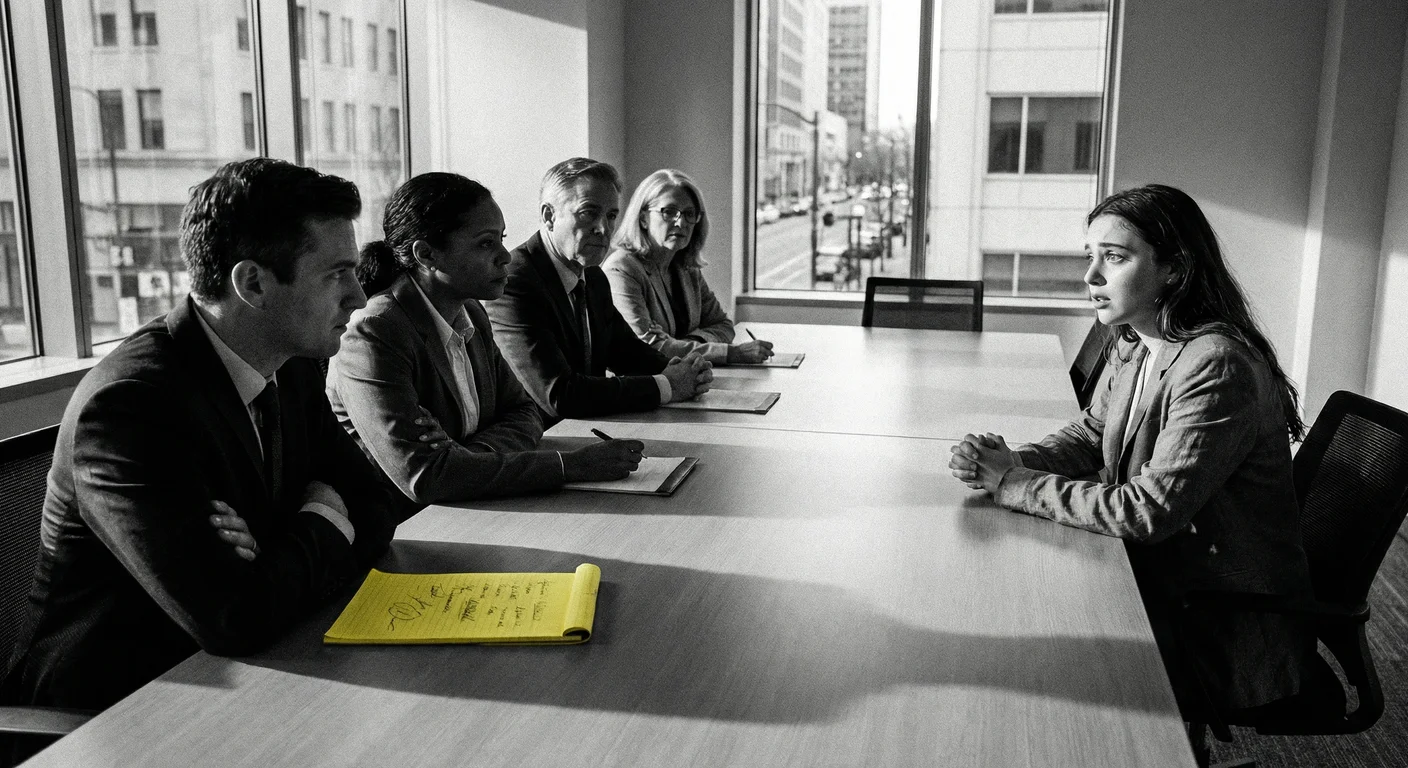
What exactly is a cognitive bias in recruitment?
A cognitive bias is a systematic error in judgment that skews logical thinking toward emotional shortcuts. In the context of recruitment, this phenomenon transforms the hiring interview — meant to be an objective evaluation — into an exercise of subjective projection where the recruiter sees what they want to see. More than 180 cognitive biases influence every second of our interactions, according to a recent analysis by The World on selection mechanisms.
Your brain processes 11 million bits of information per second, but only 40 reach your conscious awareness. To manage this cognitive overload, it uses automatic schemas — stereotypes that save mental energy. When you meet a candidate, you are not truly evaluating them. You are comparing their image to thousands of references stored in your emotional memory. The problem? These references are biased by your upbringing, culture, past experiences, and even your current mood. An ADP study shows that 25% of hiring decisions differ completely between two interviewers evaluating the same profile.
Key point: Recruitment biases are not opinions, but neurological mechanisms that activate in 0.2 seconds — well before you ask your first question.
The psychology of snap judgment in interviews
The human brain hates uncertainty. Faced with an unknown, it immediately seeks to categorise, classify, decide. This is what ArchiBat research on selection dynamics reveals: 60% of recruiters decide to hire within the first 16 minutes of the interview, and 25% decide within the first 3 minutes. You are not evaluating 45 minutes of skills — you are validating an impression formed in 180 seconds.
This phenomenon is called the primacy effect. The first piece of information received disproportionately weighs on the overall judgment. If the candidate mentions having worked at a prestigious company in the first few seconds, your brain will automatically trigger the association "prestigious = competent." The entire rest of the interview will serve to confirm this initial hypothesis, rather than to test it objectively. This is confirmation bias in action — you look for proof of your intuition rather than raw facts.
Why experience does not protect against errors
Senior recruiters often think their expertise makes them immune to bias. The opposite occurs. The more experience you have, the more your brain has developed comfortable — and dangerous — shortcuts. A manager with 15 years' seniority doesn't see a candidate. They see the synthesis of 200 past candidates, projected onto a new face. This illusion of mastery makes experts even more likely to overlook contradictory signals.
Unstructured interviews — those improvised conversations meant to judge "personality" — amplify these distortions. RQÉDI research clearly shows that these free-flowing exchanges are often unreliable for evaluating candidates. Without a standardised evaluation grid, each interviewer creates their own arbitrary criteria. One day, it's the handshake that counts. The next, it's the brand of watch. The result? A lottery where technical talent loses to accidental charm.
The 5 recruitment biases that cost your company a fortune
Each cognitive bias in recruitment has a direct financial cost. The turnover generated by bad hires represents between 50% and 150% of the annual salary of the vacant position. For a role with a €60,000 annual salary, a hiring mistake bills €30,000 to €90,000 in training, lost productivity, and a new selection process. Here are the five most costly neurological sabotages.
The halo effect: when one quality blinds you to everything else
The halo effect occurs when one specific positive characteristic artificially illuminates the entire profile. The candidate speaks 8 languages fluently? Your brain automatically deduces they are intelligent, organised, reliable, and a leader — without proof. This is what iCIMS documents in its analysis of evaluation distortions: a peripheral skill can completely overvalue a candidate unqualified for the actual role.
I've seen companies hire catastrophic salespeople because they did triathlons. The high-level sport signalled "discipline" and "resilience" — desirable qualities — masking a total lack of customer empathy and negotiation technique. The candidate shone because of their hobby, not their professional skills. Six months later, sales targets weren't met, but the manager kept a positive image "because they're so determined, you see."
Similarity bias: hiring your cultural clone
This is perhaps the most insidious. Similarity bias pushes us to favour candidates sharing the same gender, school, geographic origin, or hobbies as the recruiter. This mechanism creates a deadly homogeneity in teams. You end up building a group with identical thinking, incapable of divergent innovation, blind to unconventional market opportunities.
A study reveals that distracted evaluators — tired, rushed, or conducting multiple interviews — consistently give lower scores to women than men for identical performances. Not out of conscious misogyny, but because the tired brain reverts to conservative archetypal patterns. The same phenomenon applies to differences in age, accent, or academic background. The candidate who "doesn't remind you of anyone" — meaning, who doesn't match any familiar stereotype — starts with an invisible 20% handicap in your subjective evaluation.
Confirmation bias: the trap of blind validation
Once you've formed a first impression — positive or negative — your brain goes into confirmation mode. You ask questions geared toward validating your hypothesis. If you think a top-school degree equals excellence, you'll read their answers as proof of brilliance. If you suspect their atypical career path, you'll interpret the same answers as signs of instability.
ADP illustrates this perfectly: assuming a graduate from a top school is brilliant becomes a self-fulfilling prophecy. You ask them harder questions to test their supposed excellence — they answer well because they are prepared for hard questions — you confirm your initial bias. Meanwhile, the self-taught candidate gets basic questions, answers simply, and you conclude they lack depth. You haven't evaluated two profiles. You've confirmed your prejudices about two different life paths.
Physical attractiveness: the pretty privilege in numbers
An American report cited by Deel reveals an embarrassing truth: candidates rated 7/10 aesthetically have twice the chance of being hired than those rated 3/10 — for roles where physical appearance is completely irrelevant. This attractiveness bias automatically overestimates skills based on looks. Attractive = competent, nice, leader. Less genetically blessed = less charismatic, less reliable, less competent.
In sales or customer relations, this distortion is amplified. It is falsely assumed that a beautiful smile generates more commercial trust. In reality, authenticity and empathy determine commercial performance, not high cheekbones. Yet, skills assessments consistently show higher scores on "relationship skills" for physically pleasing profiles — regardless of their objective past results.
Beetle syndrome: obsession with parasitic detail
The beetle syndrome — or distraction-by-detail effect — fixates some recruiters on a minor element to the detriment of the essentials. A candidate wears a flashy orange tie? You see nothing else. They have a visible tattoo? Your brain loops on this supposed transgression of professional norms. It's one of the 180+ biases identified by neuroscience that parasitise candidate selection.
I witnessed an interview where a manager rejected an exceptional developer because they said "you" (informal) instead of "you" (formal) in a sentence. A micro-error of language register eclipsed three years of experience in complex software architecture. The beetle bias had turned a trifle into a deal-breaker. The next candidate, less technically competent but using more formal vocabulary, got the job. Six months later, the company was looking for another developer — the first choice having left due to proven incompetence.
⚠️ Warning: These biases add up. A candidate who is attractive, graduated from your school, practices your favourite sport, accumulates multiple advantages — with no correlation to actual job performance.
Why the unstructured interview is a statistical catastrophe
Most companies believe they conduct professional job interviews. In reality, they organise sessions of improvisational theatre where the best actor wins — not the best candidate. The lack of methodological structure turns the process into a cognitive minefield where every step is an opportunity for error.
Unstructured interviews correlate poorly with actual future performance. RQÉDI research demonstrates that these free conversations, often valued for their "human aspect," are often unreliable for evaluating candidates. Without standardised questions, without a pre-established evaluation grid, without weighted objective criteria, you measure nothing. You feel. And feelings change depending on the weather, the caffeine level in your blood, or the last aggressive email received before the interview.
Improvisation kills objectivity
When a recruiter improvises their questions, they create inequivalent conditions between candidates. The first gets easy questions because you're relaxed. The last gets trick questions because you're tired. One talks about their hobbies for 20 minutes because you share their passion. Another gets cut off after 3 minutes on the same topic because you're hungry.
This variability makes any comparison impossible. Worse: it favours confirmation biases. You naturally ask questions that comfort your initial impression. You avoid topics that might reveal awkward incompatibilities with your idealised image of the candidate. The interview becomes a dance of seduction where everyone hides their real flaws behind a polished social performance — a performance that has no relation to the ability to manage a project under pressure or resolve team conflicts.
Disagreement between recruiters: when subjectivity rhymes with chaos
The ADP study reveals that 25% of evaluations differ completely between two HR professionals interviewing the same candidate on the same day. Imagine: one gives 18/20, the other 12/20. Who is right? Neither. Both are projecting their unconscious biases. This disagreement rate makes selection by committee ineffective — each defends their biased intuition rather than measurable facts.
Standardised deferred video interviews offer a solution path. When all candidates answer the same questions, in the same order, with the same allotted time, you drastically reduce the variables of bias. iCIMS documents this approach as an effective method to standardise evaluations and reduce these biases. The identical context for all forces the brain to compare apples with apples — not charismatic oranges with technically skilled but shy apples.
SIGMUND HR assessment tests: precise surgery against unconscious bias
Had enough of paying the high price for mistaken intuitions? SIGMUND recruitment tests replace divination with scientific measurement. These cognitive and behavioural assessment tools eliminate recruitment biases by evaluating real cognitive adaptability — not academic pedigree or smile beauty.
The fundamental difference? A standardised test doesn't know the candidate's skin colour. It ignores their accent, address, school of origin. It measures only what predicts performance: learning capacity, resilience to stress, behavioural consistency, situational intelligence. When you combine structured interviews with scientifically validated personality tests, you reduce the recruitment error rate by 40 to 60%.
Cognitive adaptability vs. the diploma myth
The labour market is evolving faster than ever. A technical skill acquired 5 years ago is obsolete today. What matters is the ability to learn, pivot, adapt. SIGMUND personality tests evaluate this mental plasticity — this fluid intelligence that traditional interviews completely fail to detect.
A candidate without a degree but with superior cognitive adaptability systematically outperforms a rigid degree-holder in the long term. Yet, confirmation bias pushes us to prefer the latter. SIGMUND tests reverse this equation. They identify high learning-potential profiles regardless of their academic path. Result: you discover hidden talent that your competitors have rejected due to educational snobbery — and you retain them long-term because they know you bet on their real abilities, not their titles.
Drastic reduction of turnover and hidden costs
Each resignation within the first 18 months costs 50% to 150% of the annual salary in recruitment, training, and lost productivity. Most of these failures come from a poor cultural or behavioural fit — exactly what SIGMUND tests measure before signing the contract. By evaluating the deep compatibility between the psychometric profile and the specific work environment, you avoid premature departures.
A company systematically using SIGMUND HR tests reduced its turnover by 35% in one year. Not by recruiting less, but by recruiting right. Candidates placed via objective evaluation stay because the role genuinely matches their natural strengths. They didn't play a role during the interview only to be disappointed daily. The transparency of the tests creates a realistic alignment between expectations and job reality.
Tests don't replace the human. They correct its neurological blind spots so it can finally see clearly.
How to eradicate unconscious bias from your selection processes
The good news? Cognitive biases in recruitment can be fought with rigorous protocols. You cannot delete your biases — they are neurologically ingrained. But you can circumvent their effects with objective systems. Here is the operational protocol.
Step 1: Anonymise the pre-selection
Remove names, age, photo, address, and schools from CVs before the first selection. Evaluate only declared technical skills and relevant experience. Ethical AI software can do this sorting for you — or ask an assistant to mask this information. When you don't know if the candidate is a man or a woman, a Harvard graduate or self-taught, you are forced to judge the substance.
Step 2: Standardise interviews
Establish a list of 10 identical questions for all candidates for a given role. Same order, same allowed response time, same numbered evaluation grid (1-5) for each criterion. Prepare behavioural questions like: "Describe a situation where you had to manage a team conflict — what exactly did you do, what was the result?" These situational questions reduce the halo effect by forcing concrete evidence rather than charismatic generalities.
Step 3: Introduce psychometric tests
Systematically integrate personality and aptitude tests before the final interview. Use the results to adjust your questions: if the test reveals a weakness in stress management, probe that point specifically rather than being seduced by a calm appearance. Tests serve as a counterweight to your intuitions — when the test says "high risk of impulsivity" and you find the candidate "dynamic," it's time to doubt your feeling.
Step 4: Diversify the interview panel
Never let one person decide. Form mixed panels — different departments, genders, generations, cultural backgrounds. When three evaluators with different biases converge on the same conclusion, reliability increases. If they diverge, it's a warning signal: the candidate is likely playing an adaptive social role that doesn't match their deeper reality.
Step 5: Audit your past hires
Retrospectively analyse your last 20 hires. Which profiles have you systematically favoured? What success rate did "off-profile" candidates have versus those who "resembled you"? This data-driven analysis reveals your specific personal biases. Perhaps you overvalue athletic candidates? Perhaps you underestimate international profiles? The objective measurement of your past errors is the best antidote to future repetition.
- ✓ Remove photos from CVs upon receipt
- ✓ Use an identical numbered evaluation grid for all
- ✓ Ask the same questions in the same order
- ✓ Have your choices validated by a diverse committee
- ✓ Measure actual performance 6 months after hire vs. your predictions
Frequently asked questions about unconscious bias in hiring interviews
Can recruitment bias be totally eliminated?
No, because it is neurologically inscribed in cerebral functioning. But it can be effectively contained through standardised processes and objective evaluation tools like recruitment tests that bypass subjective projection mechanisms.
What is the real cost of a biased hire?
A failed hire costs between 50% and 150% of the annual salary of the role concerned. For a role with a €40,000 gross annual salary, the error bills €20,000 to €60,000 in recruitment fees, unproductive training time, and team impact.
Why are traditional interviews so unreliable?
Because they measure social performance and improvisation ability, not real competence for the role. 60% of decisions are made in less than 16 minutes, based on appearance and cultural similarity rather than verifiable abilities.
Do psychometric tests eliminate all bias?
They eliminate bias related to physical appearance, social origins, and first impressions. However, they must be used as a complement — not a substitute — to a structured interview for a relevant 360° evaluation.
How to convince my management to invest in anti-bias processes?
Present the numbers: a 25% reduction in turnover represents savings of several hundred thousand euros annually for an SME with 50 employees. Tools like HR tests pay for themselves from the first avoided bad hire.
Conclusion: stop hiring with your gut
Unconscious bias in interviews is not a character flaw — it's a bug in the human cognitive system. You cannot delete it by good will. You neutralise it with process discipline and the power of data. Every time you rely on your "intuition" without an evaluation grid, you're betting €50,000 on an impression formed in 3 minutes.
The war for talent demands precise weapons. Improvised interviews are wooden swords. Validated psychometric tests, standardised grids, and anonymised CVs are your modern arsenal. You are not hiring to have socially pleasing interactions — you are hiring to generate lasting economic results.
Ready to surgically remove human error from your processes? Explore SIGMUND evaluation solutions and transform your hiring from costly lotteries into a science of performance. Your teams — and your balance sheet — will thank you.
Immediate action: Analyse your last hire. How many objective criteria did you have? How many intuitions? If the ratio isn't 80/20 in favour of the objective, it's time to change your method before the next interview.
How to detect unconscious bias in interviews before it sabotages your decision
You think you're objective? Think again. 25% of recruiters decide to hire or not within the first three minutes of the interview. Three minutes. Not enough time to evaluate complex skills, but plenty for the unconscious to take the wheel. Early detection of bias mechanisms is the first line of defence against failed hires costing 50% to 150% of the role's annual salary in turnover.
Key point: Unconscious bias in interviews is not a moral fault but a neurological reflex. The brain processes 11 million bits of information per second, of which only 40 consciously. The rest relies on often erroneous cognitive shortcuts.
Behavioural warning signs to watch for in the interviewer
Your body betrays your biases before your words even express them. Uncontrollable micro-expressions to posture changes, the interviewer experiencing cognitive bias in recruitment shows specific physiological signs. The strained smile when presenting an atypical career path. Excessive nodding with a candidate sharing your alma mater. These automatic reactions betray an inappropriate emotional connection or an unexplained repulsion disconnected from the role's requirements.
Temporal asymmetry is a major indicator. When an interview drags on with a candidate "you just like" while you cut others short citing a busy schedule, you are no longer in professional evaluation but in social seduction. 60% of recruiters genuinely stop listening after sixteen minutes and switch to validating their first impression. This is exactly when confirmation bias turns the interview into a ceremony confirming an already irrationally made choice.
The halo effect operates silently when an isolated quality parasitises the overall evaluation. A candidate speaking eight languages triggers immediate admiration despite a glaring technical mismatch with the back-end developer role sought. Conversely, a regional accent or non-conforming academic background triggers the horn effect, where a minor negative detail taints all demonstrated skills negatively. These distortions are observed in feedback formulation: disproportionate comments on secondary aspects masking the absence of evaluation of critical skills.
Analysing recruitment data to identify patterns
Your numbers don't lie. They tell the story your ego refuses to hear. A rigorous statistical analysis of past hires reveals worrying patterns: over-representation of degrees from a particular school, unexplained salary disparity between genders for identical roles, or disproportionate failure rates of candidates from certain neighbourhoods. This data constitutes the most difficult internal audit for any HR department concerned with equity.
Inter-evaluator disagreement serves as a precise thermometer. When two interviewers score the same candidate with a gap greater than 20%, unconscious bias in interviews rears its head. This variance explains why 74% of recruiters admit to having already rejected a qualified candidate for subjectively "off-profile" reasons. Standardising evaluation grids stands as the only bulwark against these professionally irrational divergences.
Examining conversion funnels highlights inexplicable leaks. Why do female candidates disappear between the first and second technical interview? How to explain that senior profiles never pass the culture fit stage? These journey breaks signal invisible filters operating unbeknownst to teams. Segmenting data by socio-economic origin, gender, age, and academic background often reveals truncated recruitment pyramids betraying structural systemic biases.
The retrospective audit of hiring decisions
Put yourself on the grill. Analyse your last ten hires with the coldness of a surgeon. Among those hired on a positive "feeling," how many stayed beyond eighteen months? How many achieved set goals beyond the simple adaptation period? Often, the answer hurts managerial pride. Intuitively "perfect" hires show failure rates 40% higher than hires based on objective, documented criteria.
The cost of hiring errors accumulates insidiously. Beyond lost salary and replacement fees, one must quantify the lost opportunity, the moral impact on the team, and the management hours spent dealing with incompetence that was kindly hired. A recent study estimates this cost between €30,000 and €150,000 for an average role, explaining why recruitment biases are not a gentle fate but a treatable financial haemorrhage.
The reverse feedback exercise with unsuccessful candidates offers enlightening perspectives. These external testimonies, collected anonymously, highlight unacceptable treatment disparities. Some describe structured professional interviews, others disorganised conversations where the interviewer spoke 80% of the time. These experience gaps reveal inconsistencies inherent to processes affected by cognitive bias in recruitment.
Proven combat methods to eradicate recruitment bias
The arsenal against unconscious bias in interviews exists. It consists neither of soothing trainings on benevolence, nor poorly digested quotas, but of rigorous protocols, imposed structures, and implacable metrics. The war for talent is not won with good intentions, but with anti-fragile systems. When more than 180 cognitive biases threaten each hiring decision, only an industrialised, scientific process offers credible resistance.
The structured interview: STAR protocol and standardised questions
Improvisation is the ally of bias. Every unprepared interview becomes fertile ground for personal preferences masked as professional intuitions. The structured interview imposes a rigid framework: identical questions, identical order, identical evaluation criteria for each candidate. This standardisation reduces by nearly 70% the evaluation gaps attributable to interviewers' unconscious preferences.
The STAR method (Situation, Task, Action, Result) constitutes the ultimate weapon against hollow generalities. Instead of asking "Are you good under pressure?" — an open question biased toward self-reported answers — we demand: "Describe a specific situation where you managed a project with an impossible deadline. What was your precise task? What concrete actions did you take? What measurable results ensued?" This format forces behavioural evidence and eliminates subjective appraisals of perceived character or personality.
The pre-established weighted evaluation grid transforms the interviewer into an objective auditor. Each required skill is assigned a strategic weight before the first interview. The candidate receives a score of 1 to 5 on each criterion, with precise behavioural anchors defining each level. No more room for the halo effect of prestigious but poorly exploited experience, nor for punishing a brilliant developer's lack of charisma. Only demonstrated behaviours count, documented on a standardised sheet immediately comparable between candidates.
⚠️ Warning: Unstructured interviews display psychometric reliability close to chance. Only standardised behavioural interviews achieve acceptable predictive validity coefficients for high-impact hiring decisions.
Skills-based recruitment vs. the cult of diplomas
Beetle syndrome strikes brutally. This bias pushes us to overvalue status signals similar to our own: same engineering school, same trendy neighbourhood, same passion for golf or natural wine. Implacable skills-based recruitment demonstrated by evidence replaces these social totems with proofs of real ability. Gone is the automatic filter for a master's degree when the role requires technical expertise acquired through experience or self-teaching.
Anonymising biographical elements during the first selection phase revolutionises pipeline quality. By masking schools, names (often indicative of ethnic origin or gender), birth dates, and photographs, we force the evaluator to focus on concrete professional experience. Companies adopting this method report a 35% to 50% increase in the diversity of profiles selected for interviews, with no perceived drop in the quality of retained candidates.
Blind interviews represent the logical extension of this approach. Conducted by phone or via specialised platforms masking the candidate's identity, they evaluate purely the ability to answer technical and behavioural questions. No more physical attractiveness bias carrying weight: a study shows that candidates rated aesthetically 7/10 or higher receive twice as many offers as those rated 3/10, regardless of their actual qualifications for the role.
Diversity of the selection committee as a cognitive shield
Homogeneity kills objectivity. A recruitment committee composed solely of male forty-somethings from top schools will mechanically reproduce these profiles, perpetuating a dangerous intellectual monoculture for innovation. The diverse composition of interview panels — mixing genders, generations, professional cultures, and personal backgrounds — creates productive tension that roots out individual biases.
The structured debrief with separation of facts minimises groupthink. Each committee member individually fills their evaluation grid before any oral exchange. This pre-individualisation prevents the charismatic leader from imposing their vision, or the first speaker from creating an anchor impossible to move. Only after this independent documentation does the group share evaluations, debating significant gaps with an obligation for factual argumentation.
The rule of a minimum of two validators with explicit veto transforms the decision-making dynamic. No hire is finalised on the opinion of a single person, however senior. Each validator must formally justify their agreement or disagreement by referencing the role's objective criteria, not "sensations" or "feelings." This administrative procedure drastically reduces hires based on similarity bias, where one hires their social reflection thinking they're hiring the best available talent.
Technologies and digital tools against cognitive bias in recruitment
Intuition belongs to the past. The era of surgical, precise, debiased recruitment relies on the modern technological arsenal. When unconscious bias in interviews exploits the reptilian brain's flaws, technology offers cold, implacable rationality. But beware: poorly used, it can also crystallise existing prejudices. The difference lies in ethical design and constant auditing of deployed algorithms.
Algorithmic anonymisation of CVs and profiles
Advanced application tracking system (ATS) software now offer selective masking modules. With a click, names potentially betraying gender or origin, photographs triggering attractiveness bias, birth dates allowing age calculation, and addresses revealing neighbourhood disappear. Only technical skills, relevant years of experience, and quantified achievements remain.
This artificial neutralisation forces a first purely meritocratic reading. The recruiter evaluates the professional journey without being distracted by the incongruous aside mentioning the same tennis club, or the prestigious degree made irrelevant for the targeted operational role. Technology companies report that this practice increases by 40% the diversity of profiles called to interview, while maintaining or even improving the performance of subsequent hires.
Anonymisation gradually extends to technical tests and work samples. Online assessment platforms assign neutral identifiers to candidates submitting portfolios or creative productions. Judges score the intrinsic quality of the work without knowing the author, eliminating confirmation biases that lead to overvaluing mediocre work from a "nice" candidate or undervaluing an anonymous masterpiece.
Objective and standardised recruitment tests
The traditional interview predicts professional future with a desperate reliability of 14%. Faced with this failure, psychometric and technical assessment tests bring predictive validity multiplied by three or four. These instruments, when scientifically constructed and normed on diverse populations, measure real aptitudes independently of the candidate's eloquence or charisma.
Modern recruitment tests evaluate cognitive skills, professional personality, and technical aptitudes under identical conditions for all. No more room for interviewer distractions — a study shows that distracted evaluators consistently give lower scores to women than men for identical performances. The standardised test doesn't know the candidate's sex, doesn't react to their clothing, isn't impressed by their address.
The combined use of valid personality tests and technical assessments creates a complete profile disconnected from first-impression biases. These tools allow objective comparison of candidates with heterogeneous paths: the one trained on the job versus the one from a prestigious school, the one returning from a career break versus the one with a linear path. Quantified data stabilises the decision in a factual rather than emotional reference frame.
Key point: Standardised deferred video interviews represent an effective compromise. All candidates answer the same pre-recorded questions within an allotted time, their responses then evaluated by several independent reviewers via a common grid.
Ethical and audited artificial intelligence
AI in service of recruitment justifiably raises fears. Poorly designed algorithms have already reproduced systemic discrimination, notably by penalising linguistic formulations specific to certain cultural groups or learning from historically biased data. However, AI consciously developed for neutrality represents the ultimate shield against unconscious human biases.
The most advanced models use explainable AI, forcing the system to justify its recommendations by objective professional criteria. If the algorithm suggests rejecting a candidate, it must specifically point out which skill is missing, and why this absence is critical for the role. This transparency allows verification of the absence of prohibited criteria (origin, gender, age) in the suggested decision.
Regular auditing of training datasets and generated results constitutes a deontological obligation. Serious companies verify that their AI tools do not create treatment disparities between protected groups, with maximum tolerated selection gaps of 5% between comparable populations in terms of qualifications. This algorithmic surveillance prevents the technological crystallisation of cognitive biases in recruitment that were thought eradicated.
FAQ: Understanding everything about unconscious bias in hiring interviews
An unconscious bias in an interview is a systematic error in judgment caused by automatic neurological mechanisms. The brain uses cognitive shortcuts to process information quickly, favouring for example candidates resembling them (similarity bias) or confirming their first impression (confirmation bias), with no conscious discriminatory intent but with a real impact on process equity.
More than 180 distinct cognitive biases have been identified by cognitive psychology, a majority of which can influence a hiring decision. The most frequent include confirmation bias, halo effect, similarity bias (favouritism toward similars), anchoring bias on first impression, and physical attractiveness bias. Each parasitises candidate evaluation differently.
Only trainings associated with systemic structural changes show lasting results. Raising awareness of bias without modifying recruitment processes temporarily reduces conscious prejudices but doesn't impact unconscious mechanisms. Maximum effectiveness combines training in bias recognition with implementation of structured interviews, standardised evaluation grids, and use of objective psychometric tests like those offered on our HR assessment platform.
The structured interview standardises all environmental and questioning variables. By asking exactly the same questions in the same order to each candidate, and using a pre-established evaluation grid with behavioural anchors, it eliminates improvisation which leaves room for personal preferences. This method increases the interview's predictive validity by nearly 70% compared to free interviews while drastically reducing treatment disparities between candidates.
The cost of a hiring error due to unconscious bias ranges from 50% to 150% of the gross annual salary of the role concerned. This bracket includes direct costs (ad posting, agency, onboarding), indirect costs (training time, team productivity drop), and hidden costs (induced turnover, employer brand degradation, litigation procedures in case of proven systemic discrimination). For a €60,000 annual role, recruitment bias can cost up to €90,000.
Conclusion: Moving from intuition to the science of recruitment
Recruitment is not a mysterious art reserved for "good judges of character." It is a demanding technical discipline, measurable, and perfectible. Unconscious bias in interviews will never completely disappear from the human mind — it constitutes our evolutionary heritage, useful for surviving in the prehistoric savannah but harmful for selecting a cloud developer or a marketing director.
Victory against these cognitive distortions passes through managerial humility. Recognising that our intuitions are fallible, that our "feelings" are often wrong, and that our brain actively seeks confirmation of its prejudices rather than objective truth. This recognition opens the way to solutions: industrialised processes, standardised evaluation, diverse committees, and cutting-edge technologies like scientific recruitment tests.
The stakes go beyond corporate ethics or brand image. In an economy where each failed hire costs tens of thousands of euros and the shortage of qualified talent worsens, eliminating cognitive bias in recruitment constitutes an imperative of raw economic competitiveness. Companies mastering these techniques possess a decisive strategic advantage: they recruit the best talent where their competitors still see "not quite fitting" profiles.
The choice is simple. Continue to recruit as in the 20th century, guided by neurologically obsolete instincts and costly confirmation biases. Or switch to surgical, objective, predictive recruitment. The war for talent won't wait for you to decide.
Ready to transform your recruitment?
Discover SIGMUND assessment tests — objective, scientific, immediately actionable.
Discover the tests →Frequently asked questions
Answers to the most asked questions on this topic
An unconscious bias in an interview is a neurological shortcut that pushes the recruiter to prefer a candidate who resembles them rather than the most competent one. The brain processes 11 million bits of information per second, of which only 40 consciously. The rest relies on automatic stereotypes.
To eliminate unconscious bias, you must standardise evaluation with objective HR tests like Sigmund that measure real skills. This method replaces subjective impressions made in 3 minutes with concrete data, thereby reducing errors costing between €50,000 and €150,000.
Hires fail because 25% of recruiters decide to hire within the first 3 minutes without evaluating skills. The brain automatically privileges candidates who resemble them. This mechanism generates turnover costing 50% to 150% of the role's annual salary.
A hiring error due to bias costs between €50,000 and €150,000. This amount represents 50% to 150% of the annual salary of the role concerned, including turnover costs, search costs, and the team's productivity drop during the vacancy.
Conscious bias is voluntary, assumed discrimination. Unconscious bias is an automatic neurological reflex: your brain processes 11 million bits of information per second, of which only 40 consciously. This mechanism is not a moral fault but a natural cognitive limitation.
To detect bias before the end, monitor your decision from the first 3 minutes. If you feel an immediate crush or aversion, it's your unconscious speaking. Ask yourself if you are evaluating skills or simply your similarity with the candidate.
Explore the SIGMUND Test Catalog
Discover our comprehensive range of scientifically validated psychometric tests
Leave a commentOrder by
Newest on top Oldest on top